When I first dove into making Eggplant Parmesan I was just another home cook late on a Saturday afternoon. The kitchen fan was whirring and I could almost taste the crisp edges of the eggplant. I remember my neighbor Barton pacing at the fence telling me that heat shapes flavor more than any fancy gadget. I kept nodding while I sliced the purple rounds thinking about what he said.
That next moment I had a pan heating on the stove. I drizzled oil and watched it shimmer. I thought about how each bubble could invite Maillard browning on that coating. You can almost hear a sizzle and know the flavor journey is beginning. Barton would lean in asking if I could smell the start of caramelization already.
I learned that slow simmer in my tomato sauce made the red bright pop with garlic and basil notes. That simmer taught me to trust patience. Every stir felt like a promise to let flavors build in low and slow fashion until they were ready to shine in layers with eggplant and cheese.
Then there was the moment where I let my cheese and breadcrumbs take a little protein rest before layering. It gave me confidence that each component had settled in. By the time I slid that pan into the oven it felt like I’d braided tradition with a nudge from my heat obsessed neighbor.
Unlocking the Secrets of Heat in Eggplant Parmesan
It all comes down to how we apply heat in stages. First we sear the eggplant slices in a pan so we can get that Maillard browning on the edges. That crisp hue is where a lot of the flavor lives. It is a kind of meeting point for fats and proteins as the surface hits high temperature.
Then we let our tomato sauce bubble at a slow simmer. That gentle bubbling coaxes sweetness out of the tomatoes while encouraging some caramelization from the natural sugars. A few sprinkles of salt and a tear of fresh basil later and we have a sauce that hums with balance without rushing.
Another trick is what I call the protein rest. After you dredge the eggplant in egg wash and breadcrumbs you let it sit just a few minutes so it can form a little crust before frying. That gives it a better hold and keeps moisture from seeping in too fast during cooking.
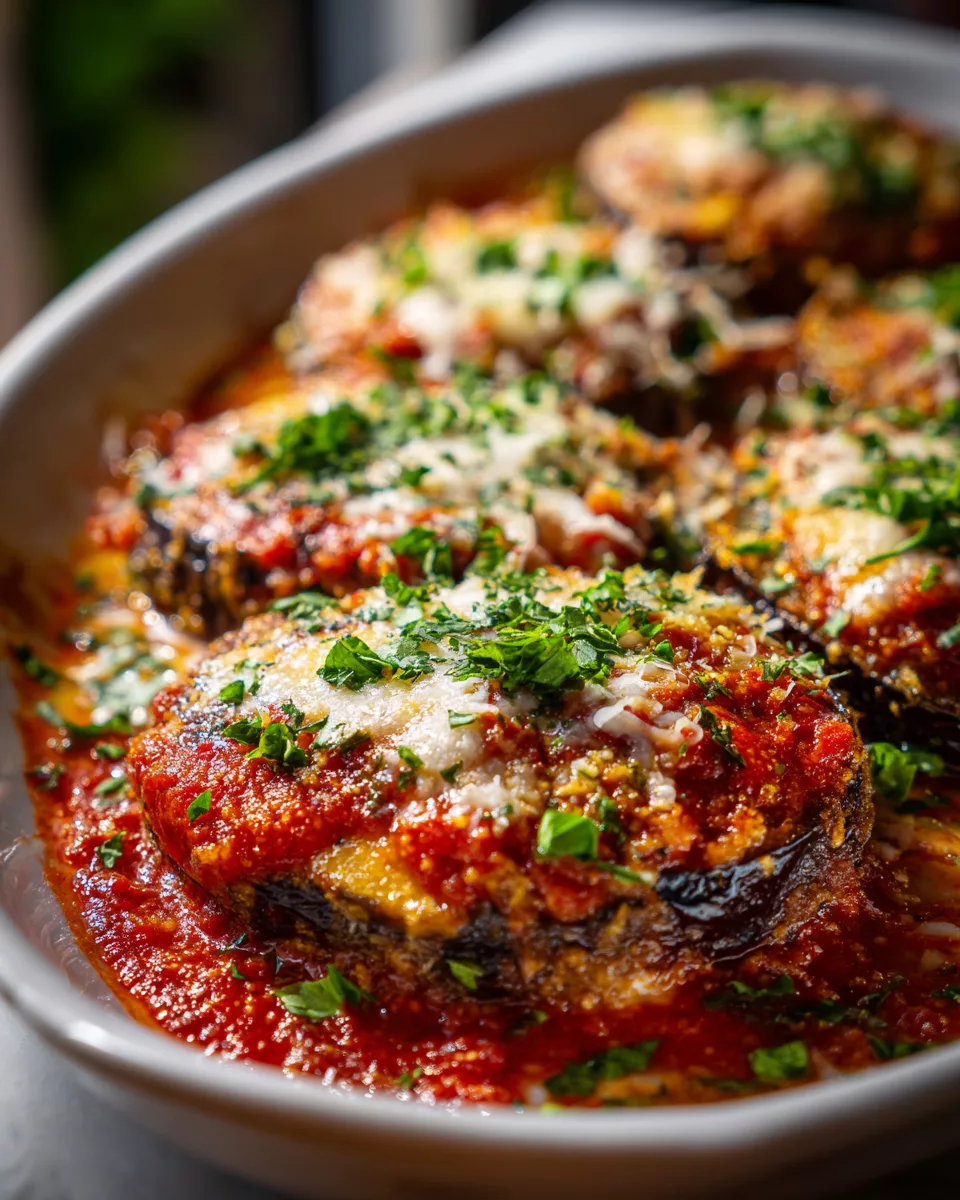
Finally low and slow is your friend when you stack everything into a baking dish. You want the cheese to melt and brown without burning the crust. Keep the oven at a moderate temperature and give it time. The result is a dish where each layer sings in harmony.
Essentials on My Pantry Shelf
I always check these items before I start. They are the backbone of any solid Eggplant Parmesan. If you have them ready life in the kitchen gets a lot smoother.
- Eggplants firm yet not soft to the touch good purple skin
- Eggs two or three beaten well for dredging
- Bread crumbs plain or seasoned as you like
- Flour all purpose for light dusting
- Canned tomatoes whole peeled or crushed for sauce
- Olive oil extra virgin to start then a bit more for frying
- Garlic cloves pressed or finely chopped
- Fresh basil leaves torn not cut to avoid browning
Having those on hand means you will not be scrambling mid recipe. The canned tomatoes get simmered down while you finish the eggplant prep. The flour egg and crumbs form a simple dredge station so you can move fast.

If you skip the fresh basil you lose that last herbal pop. And trust me you will notice. So keep a little stash in a glass of water on the counter. It rides out a few days just fine.
Getting My Workspace Ready
First I clear off enough counter space for three bowls in a row. One bowl holds flour one holds beaten eggs and one holds bread crumbs. I call this the dredge station. Each bowl sits in a line so I can dip slice rinse dip and coat without missing a beat.
Next I set my skillet on medium heat and pour in oil. I let it warm up just until it gives off a faint shimmer. Too cold and the eggplant soaks up too much oil. Too hot and you burn the crust before the inside is tender.
Meanwhile I salt the eggplant slices on a rack. That squeezes out extra moisture so you get a better fry and less steam. I let them rest ten minutes then pat dry. That step is a game changer for keeping them crisp beneath the cheese.
At this point I preheat the oven to three hundred seventy five degrees. I line a baking dish with a thin layer of sauce so the slices don’t stick. Once the pan is ready I can start layering right away after the skillet does its work.
A Whiff of What is to Come
As soon as the first eggplant slice hits the hot oil I inhale that scent of garlic and olive oil mixing. There is an almost toasty note that hints at caramelization where surface sugars meet heat.
When I pull the slice out and hear that echoing crackle I know I am on track. I toss in a clove of garlic to fry next and the kitchen fills with a warm pungent scent. It is like a promise of the comfort to come.
Halfway Check on Texture and Taste
After two layers of eggplant sauce and cheese I open the oven to peek. I want to spot those golden edges forming on the mozzarella. That is where you see Maillard browning at work again.
I give the dish a gentle shake to make sure nothing is sticking. If your sauce is too thin it can slide under the slices. So if it looks loose I pull out a spoon and stir it back in towards the edges to thick it up.
Then I adjust the rack so the dish sits a bit higher. That helps the top get better heat circulation. You want the cheese bubbling but not scorching. I let it go another five minutes before my final check.
Using a Probe for Perfect Doneness
I stick an instant read thermometer into the center of the dish. If it reads around one hundred sixty five degrees I know the cheese is melted all the way through. If you go beyond one hundred seventy you risk drying out the edges.
That probe also tells you if the sauce has thickened enough. It should feel warm and cling a little to the fork. If it is runny give it another minute of bake time. You want that slight cling without it pouring off like soup.
Once I hit my target temperature I let the whole thing rest. This protein rest period seals flavors and stops the bubbling so you do not burn the roof of your mouth when you dive in.
Serving with a Touch of Style
I slide a wide spatula under a slice and lift it onto a warm plate. The layers hold together if you did your dredge and rest steps right. I tuck a few basil leaves on the side for color and fragrance.
A quick drizzle of extra virgin olive oil around the rim gives it that little shine. It is an old Italian trick that makes it look like you fussed more than you really did.
Smart Ways to Reheat and Repurpose
If you have leftovers you can reheat them low and slow in the oven at three hundred fifty degrees. Cover the plate with foil so the top does not brown too much. It brings back the crisp edges and warm cheese without drying it out.
You can also turn scraps into a sandwich. Press a slice between two pieces of crusty bread with extra sauce and a handful of greens. Give it a minute in a pan until the cheese melts then toast it for a panini style treat.
Another tip is to chop leftover eggplant bits into a soup or stew. They add body and pull in the sauce notes. It is a neat way to extend those flavors without feeling like you are eating the same dish again.
Key Takeaways and Your FAQs Answered
Eggplant Parmesan is all about managing heat to coax out every bit of flavor. You start with Maillard browning on the pan then move to slow simmer in the sauce and finish low and slow in the oven. Letting components rest at each stage makes all the difference.
Keep your pantry stocked with the basics so you can jump in without stress. And remember that little protein rest moment for your breaded rounds. It helps keep things crisp and stops moisture from crashing the party.
Now let me hit the questions that often come up.
- How do I prevent soggy eggplant salt the slices let them sit then pat dry this draws out moisture so you get a crisp fry
- Can I make the sauce ahead absolutely it even tastes better a day later just reheat it slow and simmer to bring it back to life
- What if I do not have fresh basil you can use dried but add it early in the sauce simmer so it rehydrates and does not taste chalky
- Is there a gluten free option swap regular flour and breadcrumbs for a gluten free mix it works the same way when you dredge
- How do I store leftovers keep them in an airtight container in the fridge and reheat low and slow or they can go in the freezer for up to a month
With these tips you are ready to own your next batch of Eggplant Parmesan. Trust in heat steps and let each layer speak. Then invite that heat obsessed neighbor over to sample your handiwork.

Eggplant Parmesan
Equipment
- 1 baking sheet
- 1 cutting board
- 1 frying pan
- 3 shallow dishes for breading
- 1 mixing bowl
- 1 oven mitts
- 1 cooking spoon
- 1 saucepan
- 1 grater for cheese
Ingredients
- 2 medium eggplants About 1.5 pounds total.
- 1 teaspoon salt
- 1 cup all-purpose flour
- 2 large eggs
- 1 cup breadcrumbs
- 1 cup marinara sauce
- 2 cups shredded mozzarella cheese
- 1 cup grated Parmesan cheese
- 1 teaspoon dried basil
- 1 teaspoon dried oregano
- to taste tablespoons olive oil For frying.
Instructions
- Start by slicing the eggplants into ½-inch thick rounds. Lay them out on a cutting board and sprinkle with salt. Let them sit for about 30 minutes to draw out moisture and bitterness.
- Rinse the eggplant slices under cold water and pat them dry with paper towels to remove excess salt.
- Preheat your oven to 375°F (190°C).
- Set up a breading station with three shallow dishes: one with flour, one with beaten eggs, and one with breadcrumbs.
- Dip each eggplant slice first into the flour, then into the eggs, and finally coat with breadcrumbs. Ensure they are evenly coated.
- Heat a generous amount of olive oil in a frying pan over medium heat. Fry the breaded eggplant slices in batches until golden brown (about 3-4 minutes per side). Remove and place them on a paper towel-lined plate to drain excess oil.
- In a saucepan, warm the marinara sauce over low heat. Stir in dried basil and oregano for added flavor.
- In a baking dish, layer the fried eggplant slices. Pour some marinara sauce over the first layer, then sprinkle with mozzarella and Parmesan cheese. Repeat the layers until all the ingredients are used, finishing with a top layer of sauce and cheese.
- Bake in the preheated oven for about 30 minutes, or until the cheese is bubbly and golden brown.
- Let the dish cool for a few minutes before serving. Enjoy your homemade Eggplant Parmesan!