Turning Up the Flavor in Kharcho Beef Soup
Making Kharcho Beef Soup is more than just tossing meat and spices in a pot. I remember the first time I tried to nail that deep rich taste I had to learn about heat and how it shapes each layer of flavor. This soup is all about building a hearty base then coaxing out every bit of taste with careful cooking.
Every time I start this recipe I want to feel that first sear of beef bring out its full potential. That sizzle is where Maillard browning shows up big time. It sets the stage for the bold tomato tang and fragrant walnuts that finish the bowl. Stick with me and I’ll share my secrets for slow simmer tricks and protein rest tips that will make your Kharcho Beef Soup unforgettable.
Why Heat Principles Matter for Kharcho Beef Soup
Heat is the secret player in every great stew. When you crank up the pan to sear your beef you get that Maillard browning reaction. That is when amino acids and sugars combine into a crust that tastes so deep and savory. It only happens when you let the surface dry out a bit first then apply enough heat.
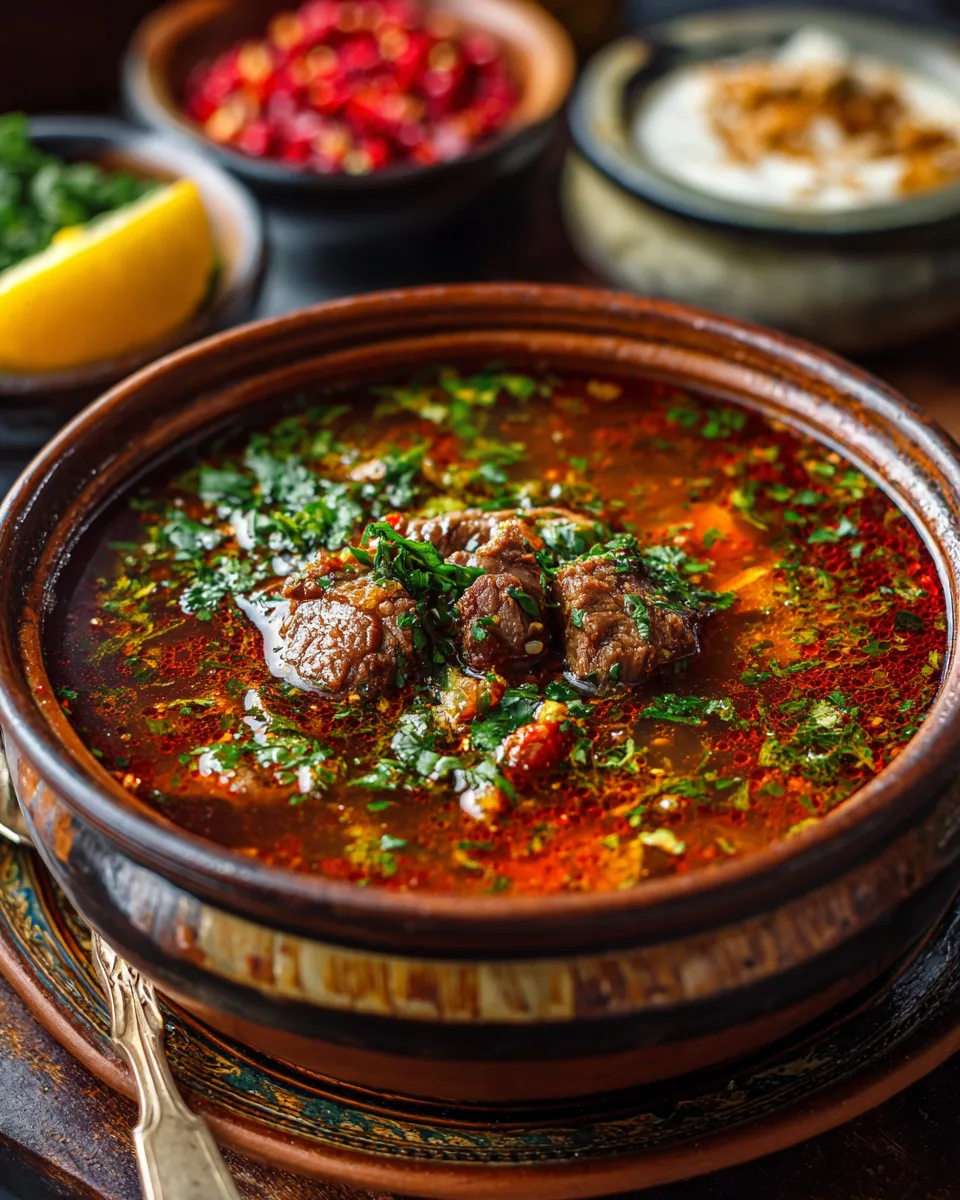
Next the low and slow phase kicks in. You drop the temperature down just enough for slow simmer magic to work without overcooking the meat. During this time collagen breaks down making the broth silky. Caramelization of onions and garlic also amps up the sweetness. Don’t forget to let the beef rest after searing. That protein rest time keeps juices locked inside and keeps your chunks tender when the simmer begins.
Gather Your Pantry for Kharcho Beef Soup
- Beef Chuck about two pounds cut into bite size pieces
- Tomato Paste two tablespoons for bright tomato tang
- Onion one large yellow onion chopped fine
- Garlic Cloves four cloves lightly smashed
- Walnuts half a cup ground up small
- Rice half a cup rinsed well
- Dried Coriander one tablespoon crushed between your palms
- Beef Stock six cups preferably homemade or low sodium
That list above covers the essentials you need to riff on this soup. You can swap beef stock for chicken stock if you only have that on hand. Just stick to the core trio of tomato paste, walnuts and coriander so it stays true to the classic recipe.
Setting Up Your Cook Space
Before you even light the stove get everything in place. I like to have my cutting board next to the pot so I can toss in veggies right after I sear the meat. Keeping ingredients within reach helps me stay focused on temperature changes and timing.
Next pick a sturdy pot that holds at least eight cups of liquid. It needs a heavy bottom so heat distributes evenly and you avoid hot spots that burn onions. I also keep a small bowl of cold water by my spatula for quick temperature checks if things feel too hot. Organization here makes the recipe flow better.
When Fragrance Fills the Air
Once you hit that sear stage you’ll smell that beef sizzling and turning deep brown. That is the Maillard browning stage in action. It pops right out at you and you know the flavor is building.
Then you stir in onions and garlic. They start to soften and a sweet smell takes over. That caramelization step is key. It gives a gentle sweetness that balances the tang from tomato paste later on. Keep stirring so nothing sticks or burns.
Keeping Tabs on Flavor Development
After you dump in the beef stock and rice it is time to drop to a gentle simmer. You want little bubbles not a full on rolling boil. That low and slow simmer gives collagen time to melt and thicken the broth without making the meat tough.
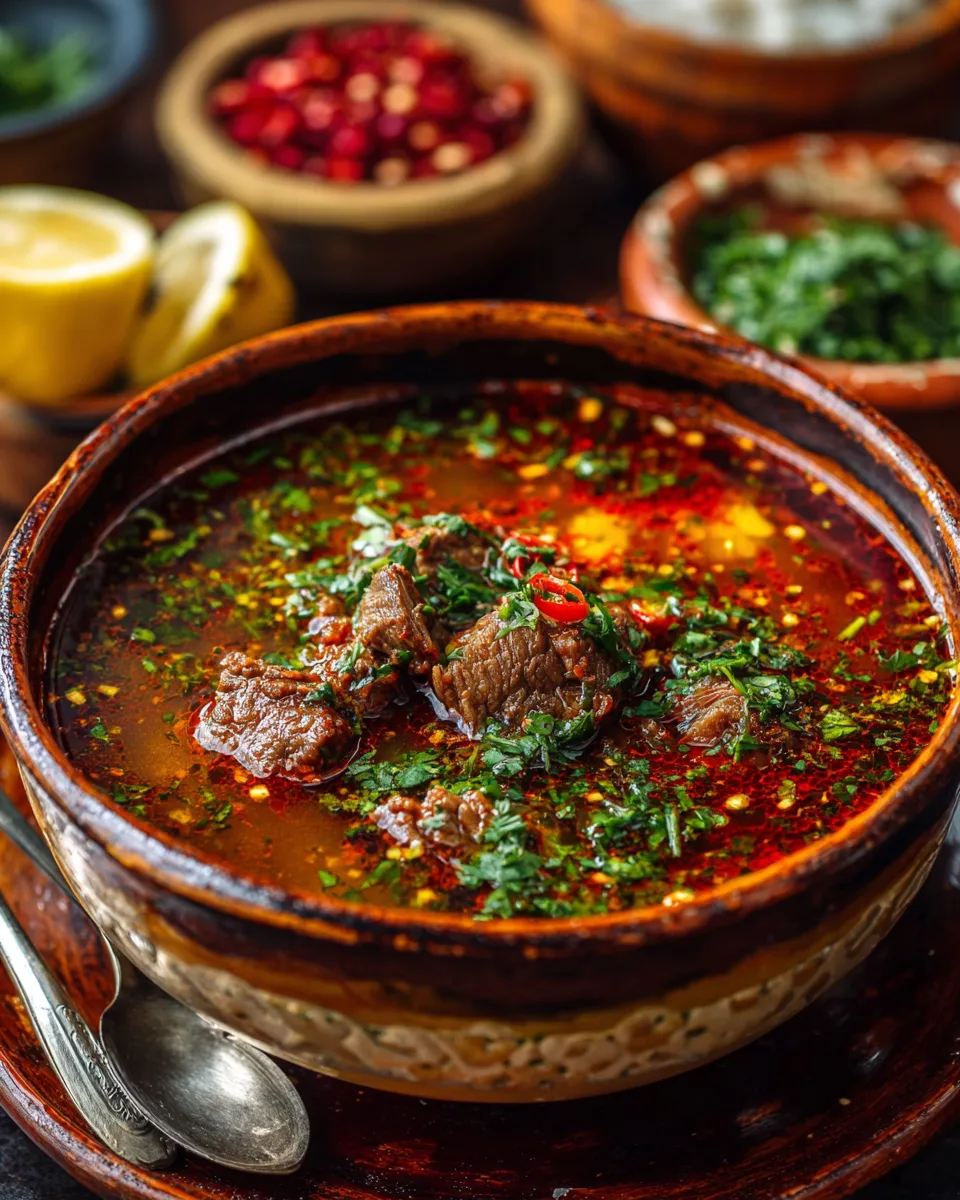
About twenty minutes in I peek at the pot every few minutes. If the top looks foamy I skim off any impurities. That keeps the broth clear and clean tasting. Then I stir in ground walnuts and coriander to let them bloom in the heat. That is when the aroma and flavor get locked in.
Reading Temperature and Texture
Here is a trick I learned for perfect texture. Use a probe or an instant read thermometer right into a piece of beef in the pot. It should read around one seventy five Fahrenheit before you pull it out to rest. That ensures it is cooked through but still juicy.
If you dont have a thermometer you can pinch a piece to test. It should give a little but not feel mushy. The rice also helps measure time. When it is just tender you know your broth has had enough low and slow simmer time to develop full body.
Serving Kharcho with Style
When you ladle the soup into bowls sprinkle more crushed walnuts and fresh parsley on top. The crunch from walnuts teamed with bright herb notes makes each spoonful feel lively. You can even add a drizzle of olive oil for a silky finish.
Serve with warm flatbread or crusty rolls for dipping. That way you can soak up every drop of broth. Resist the urge to rush this part. Let everyone admire the deep red color and inviting aroma before taking that first spoonful.
Next Day Soup Upgrades
The real test of Kharcho Beef Soup is how it tastes the next day. You get even more chance for flavors to marry overnight. On day two you might notice the broth is thicker and richer. If it feels too thick add a splash of hot water or stock to loosen it.
You can also tweak the seasoning now. Add a pinch of salt or a squeeze of lemon juice to brighten it. Fresh herbs like cilantro or dill stirred in just before reheating add a burst of freshness. That is a lifesaver for quick lunch solutions or when you want something cozy after a long day.
Key Points and Common Questions
Kharcho Beef Soup is all about layering flavors. Start with Maillard browning of beef then build with caramelized onions and garlic. Move into low and slow simmer phase so collagen melts and flavor deepens. Dont forget protein rest and slow simmer techniques to keep meat tender.
FAQ What cut of beef works best I like beef chuck since it has just the right amount of fat and connective tissue. You can swap in brisket but watch cooking time. FAQ Can I skip walnuts No thats a signature ingredient. It thickens broth and adds nutty richness. FAQ How long should I simmer Aim for at least forty five minutes after you add rice for best body. FAQ Why rest meat after sear It lets juices redistribute so beef stays moist once it hits the simmer. FAQ Can I make it vegetarian You could use mushrooms and vegetable stock but it wont be classic Kharcho Beef Soup.
With these tips and tricks you are all set to serve up a bowl of soul soothing Kharcho Beef Soup. Remember the power of heat and timing when you cook low and slow and watch how each step brings out the best in this hearty dish.
Kharcho Beef Soup
Equipment
- 1 large pot
- 1 cutting board
- 1 wooden spoon
- 1 set measuring cups and spoons
- 1 ladle
- 6 bowls for serving
Ingredients
- 1.5 pounds beef chuck, cut into 1-inch cubes
- 6 cups beef broth
- 1 cup water
- 1 medium onion, chopped
- 2 medium tomatoes, peeled and diced
- ½ cup uncooked rice
- 3 cloves garlic, minced
- 2 tablespoons tomato paste
- 1 tablespoon vegetable oil
- 1 teaspoon ground coriander
- 1 teaspoon ground cumin
- 1 teaspoon paprika
- ½ teaspoon black pepper
- ½ teaspoon salt adjust to taste
- ½ teaspoon chili flakes optional, for heat
- ¼ cup fresh parsley, chopped for serving
- ¼ cup fresh cilantro, chopped for serving
- sour cream for serving, optional
Instructions
- In a large pot, heat the vegetable oil over medium heat. Add the chopped onion and sauté until translucent, about 5 minutes.
- Add the beef cubes to the pot and brown them on all sides, about 7-10 minutes.
- Stir in the minced garlic, ground coriander, ground cumin, paprika, black pepper, and chili flakes (if using). Cook for an additional 2 minutes, stirring frequently.
- Add the diced tomatoes and tomato paste to the pot, mixing well with the beef and spices.
- Pour in the beef broth and water, bringing the mixture to a boil. Reduce the heat to low and let it simmer for about 30 minutes, skimming off any foam that rises to the top.
- After 30 minutes, add the uncooked rice to the pot. Continue to simmer for an additional 15-20 minutes, or until the rice is tender and the beef is cooked through.
- Taste the soup and adjust the salt if needed. Once cooked, remove from heat.
- Serve the soup hot in bowls, garnished with fresh parsley and cilantro. Add a dollop of sour cream if desired.