One afternoon I found myself craving something crunchy juicy and full of bold flavor. I was standing at my counter staring at a pile of chicken breasts and a block of parmesan so I decided to chase that crackly edge I knew I loved from my favorite steakhouse style dish. I wanted to capture that sizzle and golden crunch while keeping each bite tender and hot. It felt like a challenge and I was ready to dive into every science trick I had picked up along the way.
As a home cook and that neighbor always chatting about heat and how it shapes flavor I had to remind myself why I love this simple chicken recipe so much. Every little step from salting ahead of time to letting the meat rest would pull me closer to the texture and taste I chased. It is more than just breading it is a way of celebrating how heat can transform ordinary into something simply memorable. Today I want to share my way of making Longhorn Style Parmesan Crusted Chicken in a way that still feels fresh and just a bit imperfect like most home cooks dishes can be.
Under the Hood of Heat and Taste
Heat is more than just hot or not it is an entire spectrum that can coax out flavor and texture that we might miss if we are careless. Getting a good Maillard browning on the surface means those amino acids and sugars have met at high heat and turned into savory crust that sings. This is what makes the outside crisp while the inside stays juicy. It is not just about searing hot it is about building layers of flavor.
When I talk about slow simmer that usually applies to sauces but the same idea works for heating oil at the right pace. You do not want smoking oil right away or you will burn the crust. Let that oil warm up just enough so the breading cooks through without turning black within seconds. Ever tried low and slow with a little rest time for the protein before you cut in? Letting the chicken sit after you salt it helps to firm the flesh and lock in moisture. It is those small details that add up.
Your Crisp Lineup of Kitchen Staples
- Chicken Breasts about four medium pieces with even thickness for uniform cooking
- Parmesan Cheese freshly grated for nutty flavor and better adherence
- Breadcrumbs plain or panko for extra crunch
- Eggs beaten to bind the cheese and breadcrumbs
- All Purpose Flour to give the coating a dry base
- Salt and Pepper to season every layer
- Olive Oil or Vegetable Oil enough for shallow frying
- Butter a pat added near the end for flavor
- Lemon Wedges optional but bright for serving
I like to keep these items always on hand so I can go from fridge and pantry to plate in under thirty minutes. You will notice I have more cheese than usual that helps create a thicker nutty coat once it goes golden in the pan. The eggs and flour act like little glue guns in your kitchen so that crust stays put.
Mapping Out the Prep Station
Before any heat touches the pan I set up a simple assembly line at my kitchen island. You do not need fancy gear just bowls plates and maybe a tray if you have one. First I pat each chicken breast dry with paper towels and place them on a plate. Dry surface equals better crust.
Next I dust them lightly with flour on another plate then move them to the egg wash and finally to the cheese and breadcrumb mix. I keep that mix shallow so I can press each piece down and really nestle the cheese into the cracks of the crumb. You want that coating nice and snug so it does not slide off when you flip the chicken in the pan.
While that is happening I heat about a quarter inch of oil in a heavy skillet over medium heat. I watch it carefully until it shimmers and a small pinch of breadcrumb sizzles on contact. This is your green light so the coating will start crisping the second it hits.
A Crackling Moment of Aromas
The moment you lower that coated breast into the hot oil the kitchen fills up with the promise of crispy golden goodness. There is a toasty scent from caramelization of the cheese bits and that hint of butter melting at the edge of the pan. It smells like summer cookouts and cozy diners at once.
I often pause right here and breathe in deep. That mix of roasted cheese and frying bread crumbs feels like I am close to a breakthrough every time. It is a simple moment but it reminds me why I love cooking more than eating sometimes.

Halfway Through the Golden Turn
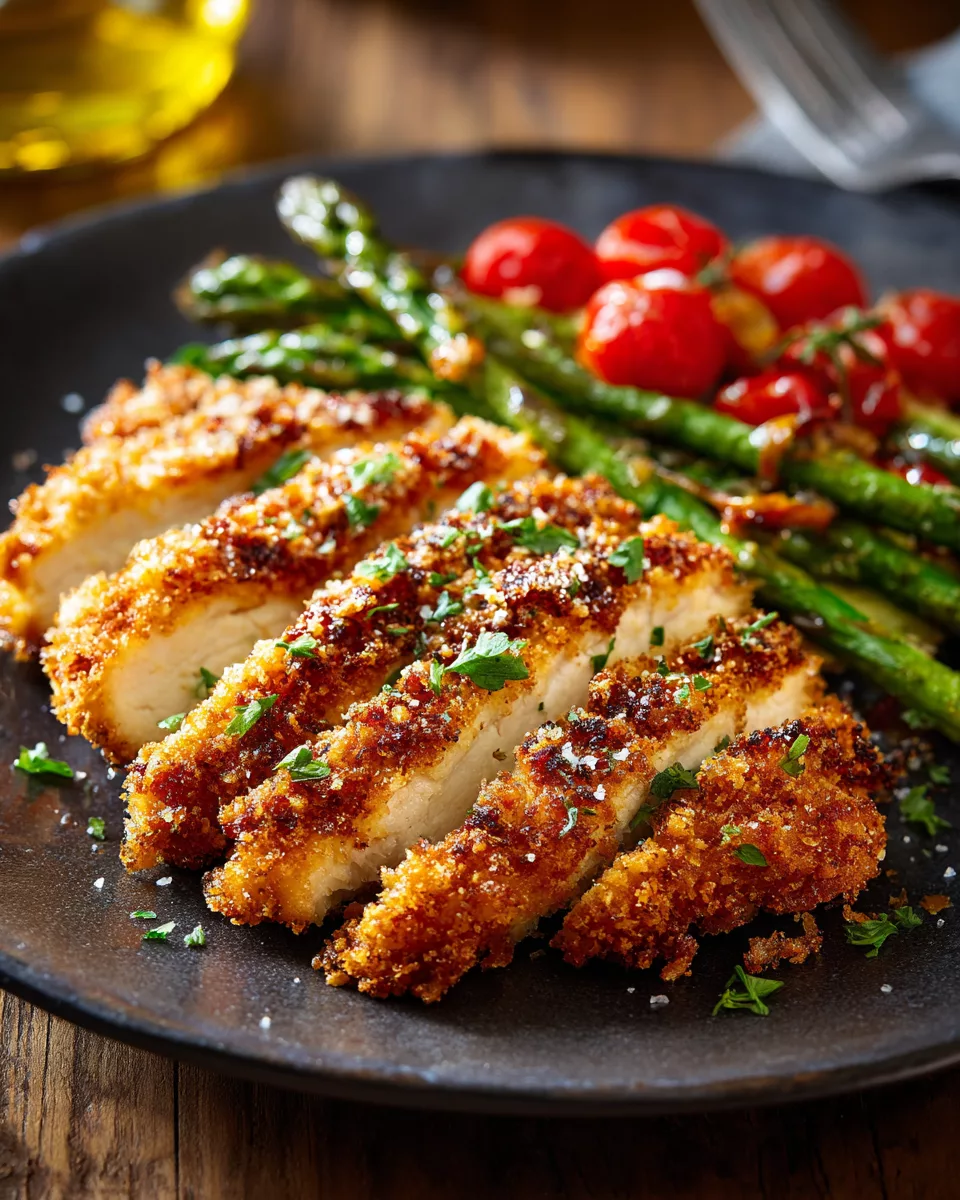
After about four minutes you will see the bottom edge deepening in color. Use a spatula and lift gently to peek at the progress. You want a deep golden brown with no gray patches. That tells you the heat is just right. If it is browning too fast lower the flame. Too slow and the coating will absorb oil and get greasy.
When one side is done carefully flip the chicken and cook the second side for another three to four minutes. I like to slide a bit of butter into the pan now to help carry flavor into those edges. The butter gives a nutty aroma and a slightly richer crust. Keep it gentle so you do not burn the butter solids.
Then I turn off the stove and let the chicken rest in the pan for a minute or two. This is my version of a protein rest. It gives the meat a chance to redistribute juices so when I cut into it the liquid stays inside the breast instead of pooling on my plate.
Touch Check Tenderness Notes
I used to cut right in but now I look for signs that the chicken is cooked through without poking holes. The crust should feel firm but springy. If you press lightly it should give just a bit then bounce back. That tells me the juices are set but not dried out.
If you have a probe thermometer aim for about one hundred sixty five degrees Fahrenheit at the thickest point. If you do not have one use the finger test on the side of the breast near the bone. A little firm but still pliable is what you want.
Dress the Golden Cutlets in Style
I like to place the chicken on a warm plate to keep everything hot. Then I scatter fresh parsley or chives over the top for a burst of color. A few lemon wedges on the side help cut through the richness if you squeeze them just before you eat.
You can serve these cutlets on a bed of greens or alongside a simple pasta tossed in garlic oil. Either way that crisp cheese coat really pops if you keep the rest of the plate easy.
Leftover Reinvention Tricks
If you have any leftovers do not toss them in the fridge. Slice the cutlets and layer them in a sandwich with lettuce tomato and a smear of mayo. The warmth from the chicken will slightly melt the cheese again making every bite satisfyingly gooey crisp and bright.
You can also chop the slices and toss them over a salad or into a wrap with some avocado and salsa. Even cold the coating stays crunchy enough to add texture. Just cover loosely with foil so you do not steam the crust in a container.
And if you feel adventurous heat them up on a baking sheet in an oven set to low and slow about two hundred fifty Fahrenheit for five minutes. That will refresh the coating without soaking it in grease from a pan.
Final Thoughts and Common Questions
I never thought a simple chicken recipe could teach me so much about heat and flavor. This Longhorn Style Parmesan Crusted Chicken brings together Maillard browning caramelization and protein rest to make each bite unforgettable. It is also forgiving for home cooks since a little under or over browning will still taste great.
- Can I use chicken thighs instead absolutely thighs have more fat so they stay juicier but cook a bit slower. Thin them out so they match the cooking time of breasts.
- Why did my crust fall off likely the oil was too hot or too cold. Make sure you dust with flour thoroughly and press the cheese crust firmly before frying.
- Is it safe to reuse the oil you can strain and save it for one more fry if it has no burnt bits. But fresh oil gives the best flavor and color.
- Can I bake instead of fry yes place on a greased sheet and bake at four hundred fifty Fahrenheit until golden brown. Flip halfway through and add a pat of butter.
- What side dishes work best anything simple like steamed veggies garlic mashed potatoes or a crisp salad. You want contrast to that crunchy coat.
Give this recipe a try and let the heat talk to you. Watch the sizzle and smell the toasty cheese as it browns and you will find so many little lessons about cooking brought out in one simple dish.

Longhorn-style Parmesan Crusted Chicken
Equipment
- 1 large skillet
- 2 mixing bowls
- 1 shallow dish
- 1 whisk or fork
- 1 meat mallet
- 1 baking sheet
- 1 parchment paper
Ingredients
- 4 pieces boneless, skinless chicken breasts about 6 ounces each
- 1 cup grated Parmesan cheese
- 1 cup breadcrumbs preferably panko for extra crunch
- 2 large eggs
- 1 cup all-purpose flour
- 1 teaspoon garlic powder
- 1 teaspoon onion powder
- 1 teaspoon Italian seasoning
- to taste salt
- to taste pepper
- as needed cooking spray or olive oil for frying
Instructions
- Preheat your oven to 400°F (200°C). Line a baking sheet with parchment paper.
- Place the chicken breasts between two sheets of plastic wrap. Use a meat mallet to lightly pound the chicken to an even thickness, about ½ inch thick.
- In a shallow dish, whisk together the eggs. In another bowl, combine the flour, garlic powder, onion powder, Italian seasoning, salt, and pepper. In a third bowl, mix the Parmesan cheese and breadcrumbs.
- Dredge each chicken breast in the flour mixture, shaking off excess. Dip it into the egg, allowing the excess to drip off. Finally, coat the chicken with the Parmesan and breadcrumb mixture, pressing firmly to adhere.
- In a large skillet, heat a few tablespoons of cooking spray or olive oil over medium heat. Once hot, add the chicken breasts, cooking for about 3-4 minutes on each side, until golden brown.
- Transfer the browned chicken breasts onto the prepared baking sheet. Bake in the preheated oven for 15-20 minutes, or until the chicken is cooked through (internal temperature should reach 165°F or 75°C).
- Remove from oven and let rest for a few minutes before serving.
- Serve with a side of roasted vegetables or a fresh salad for a complete meal.