It all started when you first rolled that dough out real thin and thought stuffing mozzarella inside would be a slam dunk. Instead the cheese popped out all over your counter making a gooey mess that nearly ruined the whole batch. You were frustrated kinda like what did i miss but then you noticed how the crust turned golden brown in spots where the steam kissed it just right
That golden sheen gave you a clue about caramelization of sugars in the crust and how protein set around the melty cheese center can lock in flavor. You restarted by letting the dough rise for the right amount of time so the gluten network had a chance to stretch and cradle the filling
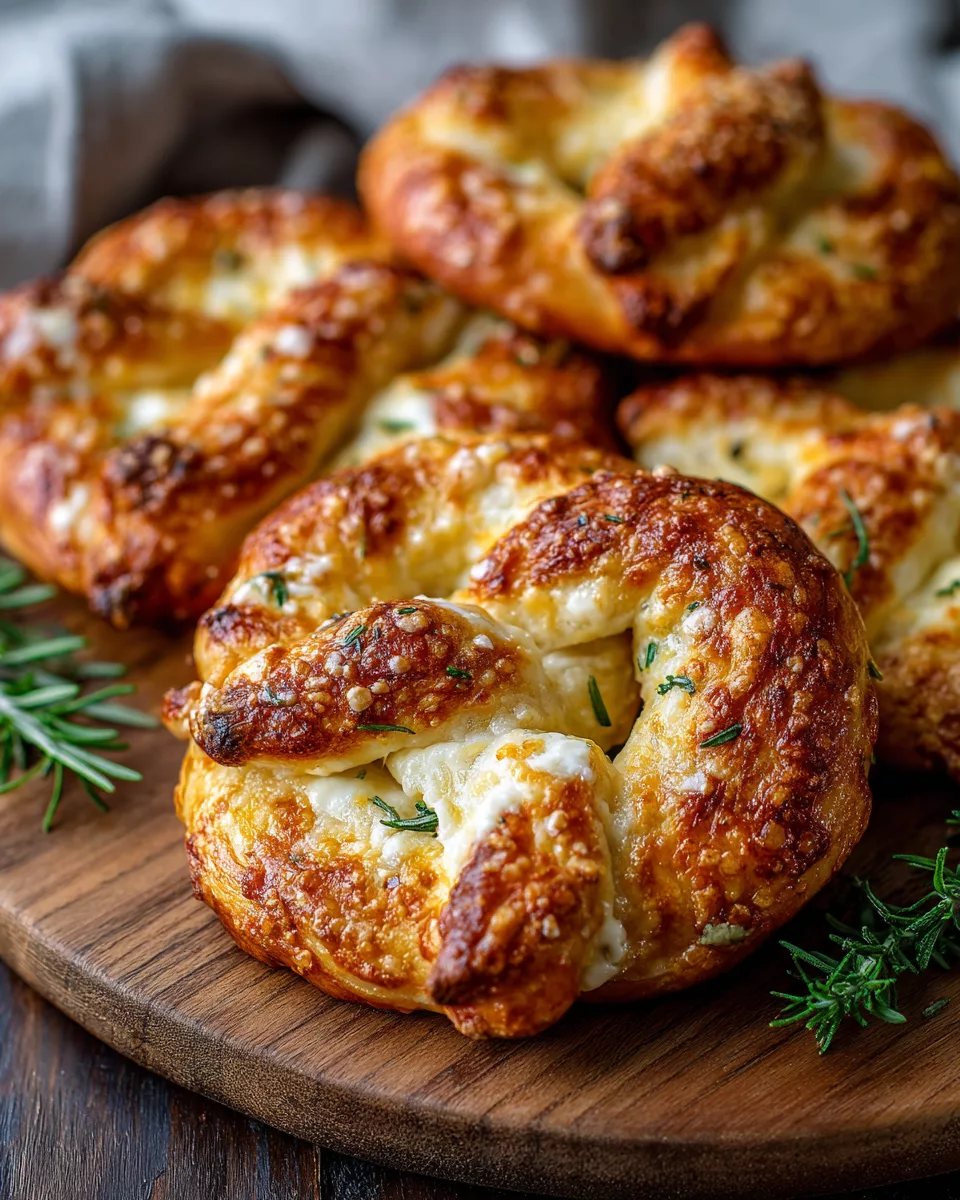
By the time you gave it another shot you were slow simmering your roll water bath with baking soda so that chemical reaction gave you a shinier crust and a better chew. Suddenly it was a win and those Mozzarella Stuffed Rosemary Parmesan Soft Pretzels came out neat and puffy just how you imagined

Why the science makes them rock
- Gluten network forms elasticity and chew by protein set when kneading and proofing take their sweet time gaining structure
- Caramelization of surface sugars in the oven gives you that golden crust and depth of flavor
- Slow simmer in a baking soda bath creates a crisp outer shell that holds melty cheese inside
- Rosemary oil infusion releases volatile aromas when heat activates its essential oils
- Parmesan dusting adds an enzymatic reaction boosting savory notes
Ingredient lineup with roles
Flour supplies starch and protein so you get that tender crumb and chewy bite
Yeast sparks fermentation making tiny gas bubbles that puff the dough into shape
Warm water hydrates flour creating gluten for structure while activating yeast
Baking soda in a water bath triggers surface browning and crispness for that classic look and feel
Mozzarella cheese delivers a gooey stretchy core when heat sets proteins around it
Fresh rosemary sprigs add aromatic oils that burst under heat releasing all those herby notes
Grated Parmesan sprinkles a salty savory layer making each bite more complex
Salt controls yeast activity for balanced rise and seasons the dough for enhanced flavor
Sugar feeds yeast during proofing and contributes to golden color via caramelization
Evoo if you like gives a soft sheen and adds richness to dough handling preventing stickiness
First stage dough rituals
Start by proofing yeast in warm water with a pinch of sugar noticing tiny bubbles surface after five minutes thats a good sign yeast is alive and ready
In a bowl add flour salt then pour in the foamy mix using a fork to combine until it all looks shaggy
Turn the dough out onto a floured surface fold it over itself repeatedly about ten times until its smooth enough to bounce back when poked
Let it rest under a damp cloth for an hour or until double in size checking how those gluten strands stretch which shows good protein set
Sneak taste moment
You pinch off a small nugget of dough after first proof and give it a nibble. It has that yeasty tang you love but still feels a bit doughy. Thats okay you just pushed the protein matrix too hard so you let it rest a bit more. A quick taste test like that keeps you on track for a soft interior without gummy bits and a punch of flavor
Heat and shape phase
Preheat oven to three hundred seventy five degrees letting the rack sit in the middle so heat circulates evenly
Divide dough into eight pieces roll each into ropes about twelve inches long then wrap around your finger to form a classic soft pretzel shape
Meanwhile bring water up to a slow simmer in a wide pot stir in baking soda then drop each formed pretzel in for about thirty seconds flipping halfway so both sides get that alkali bath
Transfer them gently to a lined baking sheet tapping off excess water so the crust can crisp
Brush each with extra virgin olive oil or melted butter then sprinkle rosemary leaves and grated Parmesan for a savory finish
Pro cooking pointers
- Dont rush proofing if dough feels tight let it rest ten more minutes this improves gluten network
- Use a thermometer checking water stays below one hundred thirty five degrees preventing yeast kill off
- For extra shine brush with an egg wash flat beaten yolk mixed with a splash of water
- Avoid overcrowding bake sheet giving pretzels room to breathe for even caramelization
- Trial one pretzel first adjusting bath time so you nail that perfect crust chew ratio
Easy pretty serves
Layer two pretzels on a wooden board and tuck fresh rosemary sprigs in between for a rustic vibe
Use small ramekins of whole grain mustard or yogurt dip placed at corners so guests can choose their fave
Scatter shaved Parmesan and a light drizzle of olive oil across the board making each piece glisten
Add a sprinkle of flaky sea salt right before serving for that last savory pop
Custom twist suggestions
Swap rosemary for thyme or oregano if yall like different herbs experimenting with volatile oils that dance under heat
Mix grated garlic into the dough for a punchy garlic herb flair
Try adding spinach puree to water bath for a subtle color change and mild veggie taste
Replace Parmesan with pecorino Romano to adjust enzymatic reactions and salt level giving a sharper bite
Play with proof times extending to two hours for a deeper fermented tang or shorten to thirty minutes for lighter chew
Keep and reuse guide
Once cooled let them rest on a wire rack then store in an airtight container at room temp up to two days keeping crust texture intact
For longer storage wrap in foil then freeze up to three months protecting flavor and moisture
To reheat close frozen pretzels on a baking sheet at three hundred fifty degrees for ten minutes reviving that soft interior and crisp exterior
If they feel stale dunk in a quick steam over simmering water before crisping in hot oven this rehydrates crust restoring chewiness
Last slice advice
Remember those pretzels are part snack part science project you get to play with dough structure and heat activated chemistry
Don’t sweat small fails they teach you about caramelization timing and protein set so each batch gets better
Keep notes on proofing temp and bath time scale up or down based on oven quirks
Enjoy every bite of Mozzarella Stuffed Rosemary Parmesan Soft Pretzels knowing you nailed the balance of gooey center and golden crust
Quick cook science questions
What causes crust browning on soft pretzels
Crust browning comes from caramelization of dough sugars triggered by oven heat and alkali in the water bath boosting Maillard reactions on the surface
Why does dough need proofing time
Proofing gives yeast time to eat sugars producing carbon dioxide inflating bubbles inside dough improving texture and flavor depth
How does baking soda bath change crust
The alkaline bath raises ph on the dough surface breaking down proteins and starches so browning happens faster making a chewy crisp crust
What is protein set
Protein set is when gluten strands tighten under heat entrapping air from yeast so the dough holds shape and bakes into a springy interior
Why is slow simmer better than rolling boil
Slow simmer stops dough from over expanding and ripping while still activating that alkali reaction gently preserving shape and texture
How can i boost herby aroma
Press fresh rosemary leaves between your fingers before sprinkling so oils distribute evenly releasing more aroma when baked

Mozzarella-stuffed Rosemary Parmesan Soft Pretzels
Equipment
- 1 mixing bowl
- 1 wooden spoon or spatula
- 1 measuring cups and spoons
- 1 baking sheet
- 1 parchment paper
- 1 pot for boiling water
- 1 slotted spoon
- 1 kitchen towel
- 1 pastry brush
Ingredients
- 4 cups all-purpose flour
- 1 tablespoon sugar
- 1 packet (2¼ teaspoons) active dry yeast
- 1¾ cups warm water Temperature should be 110°F to 115°F.
- 1 teaspoon salt
- 1 tablespoon olive oil
- 1 cup shredded mozzarella cheese
- 1 tablespoon fresh rosemary, chopped Feel free to adjust to taste.
- ½ cup grated Parmesan cheese
- ¼ cup baking soda
- 1 egg for egg wash
- coarse salt for topping
Instructions
- In a mixing bowl, combine warm water, sugar, and yeast. Let it sit for about 5 minutes until foamy.
- Stir in olive oil and salt. Gradually add the flour, mixing until a dough begins to form. Knead by hand or with a stand mixer for about 5-7 minutes until the dough is smooth and elastic.
- Form the dough into a ball and place it in a greased bowl. Cover with a kitchen towel and let it rise in a warm place for about 1 hour, or until doubled in size.
- Preheat your oven to 425°F (220°C) and line a baking sheet with parchment paper.
- Once the dough has risen, punch it down and divide it into 8 equal pieces. Roll each piece into a rope about 18 inches long.
- Place a tablespoon of shredded mozzarella at the center of each rope. Fold the sides of the dough over the cheese and roll it back into a pretzel shape, making sure the cheese is sealed inside.
- In a large pot, bring 10 cups of water to a boil. Add the baking soda carefully.
- Boil each pretzel for about 30 seconds, then use a slotted spoon to transfer them to the prepared baking sheet.
- In a small bowl, beat the egg and brush it over the top of each pretzel. Sprinkle with coarse salt and the grated Parmesan cheese, and add chopped rosemary on top.
- Bake in the preheated oven for 12-15 minutes or until golden brown.