Ever since my neighbor turned crazy about heat and how it shapes flavor I got curious. He would talk every week about Maillard browning on steak or the slow simmer trick in a stew. I thought why not borrow a page of that heat science for a plant based snack. Thats why I chose to make Roasted Red Pepper Hummus as a way to play with caramelization and low and slow roasting on sweet peppers first. It may sound a bit intense for a dip but I promise it is easy.
I like simple food but this one feels fancy when it hits the table. The peppers get sweet and smoky once roasted till the skins blister. Then I let the beans have a little protein rest in cool water so they blend perfectly smooth. Blending with tahini and lemon juice makes a bright creamy texture. Serve this with warm pita chips or crunchy veggies and watch folks go back for more. It is a real crowd pleaser.
Understanding heat science in plain words,
Heat is more than cooking in a kitchen it is science at work plain and simple. When you heat food proteins rearrange and sugars break down into new flavor bits. Thats why Maillard browning makes meat taste deeper and why caramelization gives veggies a sweet boost. Even a quick sear on vegetables creates a slightly nutty aroma that hits the roof of your mouth. You just need to pay attention.
With Roasted Red Pepper Hummus we borrow the slow simmer idea and apply it to roasting peppers low and slow in the oven. Thats how the skins blister and taste smoky and sweet. The protein rest and the slow cooling of beans helps them absorb the pepper juice better. By the time you blend everything you get a silky and balanced dip without grit. Next time you roast or simmer think of every level of heat as part of the recipe not just a number on a gauge.
Your pantry lineup for roasted red pepper hummus,
Before you start bring these items together in your kitchen. Everything sits at room temperature so it blends easy and fast. You will need some common staples and a few fun additions. I always keep these on hand for quick dips or a snack fix. Dont skip the tahini cause it helps bind the ingredients and it works with the chickpeas protein rest to give you that silky texture. And you already know we will roast the peppers low and slow for best caramelization.
- Chickpeas one can or about fifteen ounces drained and rinsed that gives you a creamy base
- Roasted red bell peppers two large or about one cup chopped they bring sweet and smoky notes
- Tahini three tablespoons for that rich nutty undertone
- Garlic two cloves peeled for some pungent punch
- Lemon juice fresh from one medium lemon adds brightness
- Olive oil two tablespoons plus extra for drizzling
- Sea salt to your taste to balance the flavors
- Cumin half teaspoon ground for a hint of warmth
You can also throw in a pinch of paprika if you want more color and mild heat. Some folks swap fresh herbs like parsley or cilantro for extra flair. Adjust the list to match your pantry and to keep this pure and simple.
Setting up for smooth prep,
Its key to get your workspace ready before you fire up the oven. Place a baking sheet on the middle rack with a sheet of parchment or foil. Grab a bowl and fill it with warm water for protein rest of the chickpeas after rinsing. That little soak helps them absorb moisture and blend up silky without grit. I like to peel the skins off a few beans by gently pinching them between my fingers it makes the final mix extra smooth.
Next line up your tools. You will need a blender or food processor that is sharp and steady. Keep a spatula close by to scrape down the sides. Dont forget to have a small bowl ready for mixing olive oil lemon juice garlic and salt. Sometimes I heat the olive oil in a small pan for a minute to draw out garlic aroma before mixing with lemon juice. The goal is to keep every step flowing without a pause.
Aroma rising in the kitchen,
As the peppers roast you will smell their skins blister and pop. That scent of sweet peppers turning smoky will make your mouth water. I love standing by the oven door just to get that first whiff of caramelization and complexity.
Its a hint of what is coming when you scoop that hummus on a plate. The bright lemon and garlic will mingle with the roasted pepper notes to fill the room. Dont be surprised if folks peek in to ask what is cooking.
Midway check in for flavor and heat,
Once the peppers have been in the oven about thirty minutes check them. They should have small dark spots showing where the heat got to work. Thats a sign of caramelization so they are ready. I like to wrap them in a dish towel for ten minutes once they come out. That steam helps loosen the skins so you dont end up with bits of char in your hummus.
While the peppers are steaming taste a chickpea or two to check if they are tender enough. If they need a bit more time you can give them a short slow simmer with a splash of water or leave them soaking a few minutes more. This protein rest and slow heat will make them perfect for blending. Dont rush this step. Putting in extra minutes here can make the final texture much creamier and the flavors more balanced. Once the peppers cool enough peel and chop before adding to the mix.
Tasting and texture notes,
After you blend everything taste a spoonful straight away. Look for salt balance the tang of the lemon and the garlic punch. If it feels flat add a bit more salt or fresh lemon juice. Dont be shy to stop the blender with a spatula and stir in an adjustment or two then blend again.
Check the texture too. It might feel thick but if it clings to the sides of the blender go for a splash of water or olive oil to thin slightly. The goal is creamy spreadable consistency with enough body so it holds shape on the plate. I sometimes let a small mound sit in a bowl and dip a chip right away to see how it breaks. That helps me know if I need more smoothness. If you want a chunkier style reserve a few chopped peppers for garnish.
Serving style and garnish tips,
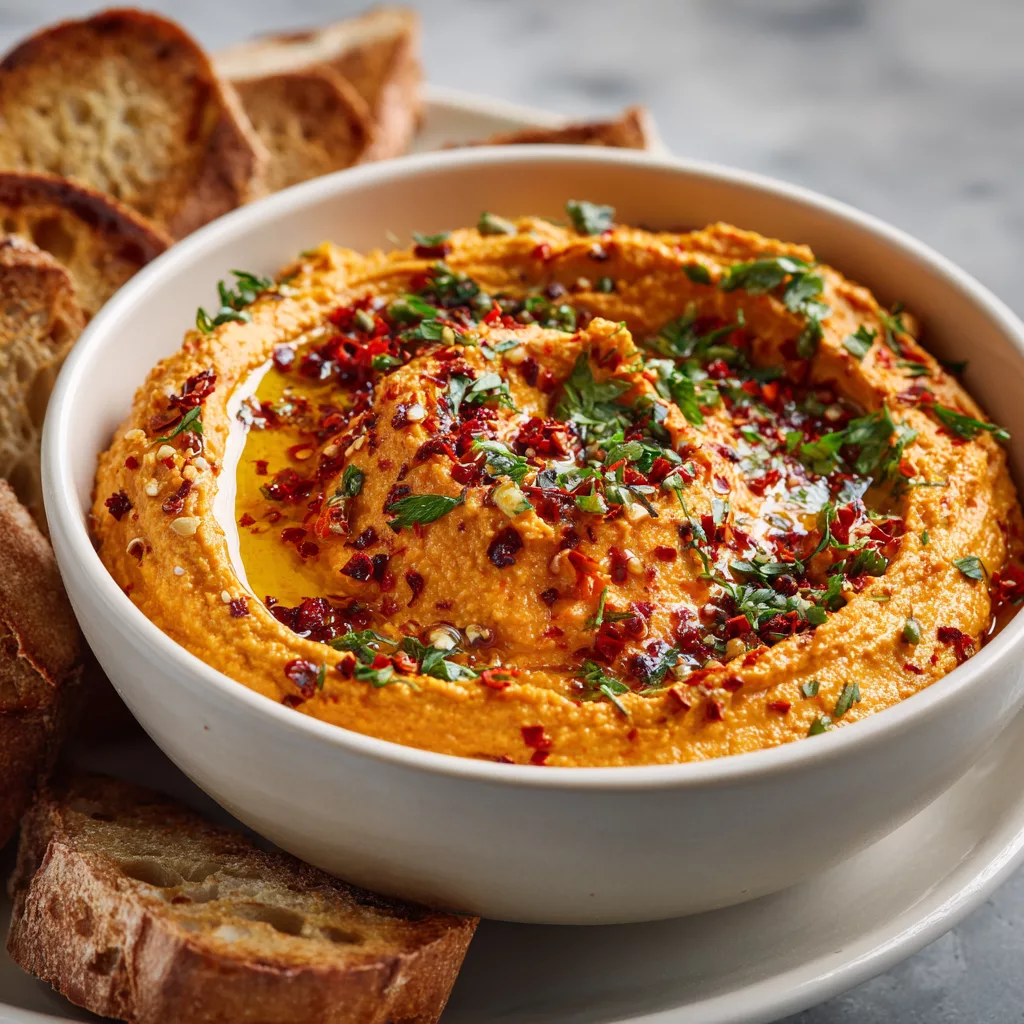
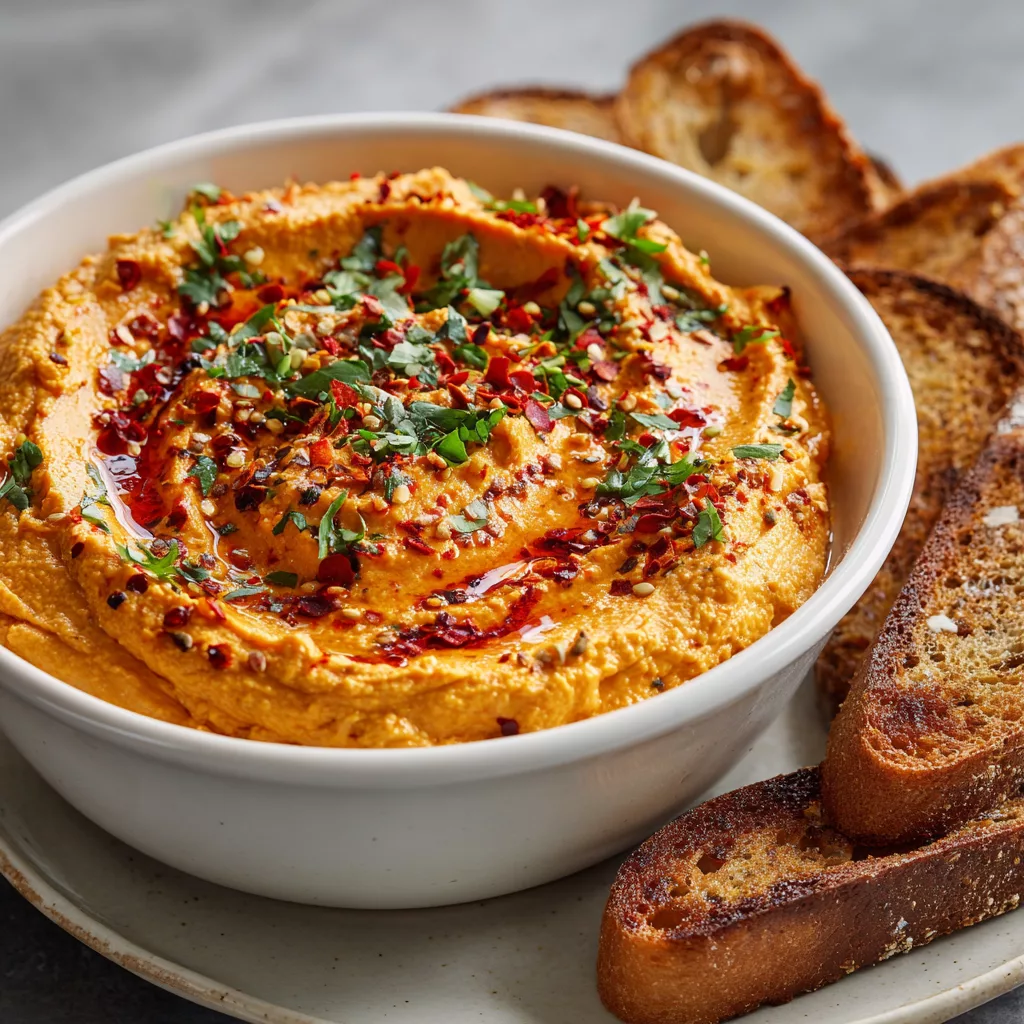
To plate scoop the hummus into the middle of a shallow dish then spread it out in a swirl. Make a little well in the center for olive oil to pool. That bright oil highlights the colors. Sprinkle chopped parsley or cilantro for green contrast. Its a simple trick that looks fancy.
For crunch add toasted pine nuts or even a few chickpeas cooked crispy with a little paprika. Dust the top with ground cumin or smoked paprika for extra depth. A few strips of leftover roasted pepper on top ties everything together. Then serve with pita chips or fresh cut veggies.
Keeping hummus fresh beyond today,
If you have leftovers spread the hummus flat in a shallow container. Pour a thin layer of olive oil over the surface to seal out air. That keeps it from drying or getting a crust. You can store it in the fridge up to five days and it still tastes bright. If the flavor dulls a bit after a day you can stir in a splash of lemon juice or olive oil to revive the taste. Dont worry if it separates just mix it back together.
For longer storage freeze hummus in ice cube trays or small containers. When frozen you can pop out a cube into a bowl then let it thaw in the fridge or at room temp. It will be a little more loose so give it a quick stir. You can also blend small amounts with vine ripened tomatoes for a quick salsa or whisk hummus into greek yogurt for a tangy spread. Use frozen cubes to add to soups or dressings as a creamy boost. Thats a neat way to avoid waste and enjoy chickpea goodness anytime.
Key takeaways and common questions answered,
By now you know that small shifts in heat and a few simple steps can make your Roasted Red Pepper Hummus shine. You saw how Maillard browning not only works on meat but also happens in nuts or even garlic for deeper notes. A slow simmer on beans is a low effort way to get that protein rest effect inside each legume. Dont rush the roast step your patience with low temperature repays you with sweet complex flavor. And a final stir in olive oil is like a finishing glaze that coats the hummus in a silky sheen. Keep tasting in between so you learn how small tweaks change the whole outcome.
- Can I skip roasting and use jarred peppers? fresh roast gives the best flavor but you can use jarred if you are in a hurry just drain and rinse them well
- Why do we let the beans rest? giving them a quick soak or slow simmer before blending helps them break down easier and gives a smooth consistency
- How long will this hummus keep? sealed with a thin layer of oil on top it stores in the fridge up to five days or you can freeze portions in ice cube trays
Dont let any step intimidate you remember its all about playing with heat and taste. Try this recipe once and then tweak to create your own perfect flavor combo.

Roasted Red Pepper Hummus
Equipment
- 1 baking sheet
- 1 food processor
- 1 measuring cups
- 1 measuring spoons
- 1 spatula
Ingredients
- 2 large red bell peppers
- 15 oz canned chickpeas, drained and rinsed
- ¼ cup tahini
- 2 tablespoons olive oil Plus extra for drizzling if desired.
- 2 tablespoons lemon juice
- 2 cloves garlic, minced
- 1 teaspoon ground cumin
- to taste none salt
- as needed none water To reach desired consistency.
Instructions
- Preheat the oven to 450°F (230°C). Line a baking sheet with parchment paper.
- Cut the red bell peppers in half and remove the seeds. Place them cut-side down on the prepared baking sheet.
- Roast the peppers in the preheated oven for about 20-25 minutes, or until the skin is blistered and charred. Remove from the oven and let them cool for about 10 minutes.
- Once cooled, peel off the charred skin from the peppers and chop them roughly.
- In a food processor, combine the roasted red peppers, chickpeas, tahini, olive oil, lemon juice, minced garlic, ground cumin, and salt.
- Blend until smooth, adding water as needed to reach your desired consistency.
- Taste and adjust seasoning if necessary. Transfer the hummus to a serving bowl and drizzle with extra olive oil if desired.