I smirk every time I think back to last Saturday when my neighbor popped by all fired up about heat and how each flame shapes taste. I cracked open a couple avocados for what I call my Avocado tuna cucumber boats and he chimed in with half a lecture on caramelization and Maillard browning. I just laughed as I scooped creamy green into each cucumber shell. I kept nudging myself to remember what he said about protein rest after a quick sear on my tuna steak. He said low and slow matters most but I was in a hurry to build those boats before my friends arrived. It ended up kind of perfect messy and real just like a home kitchen should be.
Now I find myself replaying each step in my head while I chop the cucumbers and mash the avocado. The neighbor would want me to note every temp change and every sizzle sound. I do that a little bit as I go, coaxing more flavor out of each component. You might notice at times I slip a word or two and run on a bit much but that is the charm of a real cook sharing what works. Let us sail into the next bit as I recall each turn with that heat obsessed pal in mind.
Heat talk in my kitchen
I got pretty fascinated after that neighbor lecture about how slow simmer can build mellow flavor in sauces. Even when I made my tuna I thought about Maillard browning on the outside. I seared the tuna steak for just a minute each side on medium high heat and you could smell the sweet woody notes from the hot pan. That crust adds texture just like tiny crunchy bites on a soft pillow of avocado.

I also tried resting the tuna for a bit after it hit the pan so the juices could settle. That protein rest trick keeps meat or fish juicy and not dry. I know it sounds fancy but really you just set it aside for a few minutes right after the cook time. The neighbor is always on me about that because juice redistribution makes a difference. I tossed in some chili flakes right at the end to light it up and walked it back low and slow for a final hint of warmth before slicing.
Your fresh boat crew
- 2 ripe avocados pitted peeled halved
- 1 fresh tuna steak about six ounces trimmed
- 2 large cucumbers peeled cored lengthwise
- 1 tablespoon olive oil extra virgin if you got it
- 1 tablespoon lemon juice fresh squeezed
- Salt and pepper to taste
- Fresh dill a few sprigs chopped
- Chili flakes optional for a tiny kick
These are the main players you want lined up on your counter. I like to set them in a row so nothing gets missed when I am moving fast. That tuna needs to be at room temp before it hits the pan so it cooks more evenly. Avocado gets a splash of lemon juice to keep it from turning brown. And the cucumbers are like little boats waiting for a creamy bright filling.
I keep a small bowl of salt and fresh cracked pepper right near my cutting board so I can season as I go. Fresh dill makes everything pop but feel free to swap in chives or parsley. The chili flakes are just me wanting a tiny spark without any full on heatwave. Keep it simple so you can focus on how that sear shaped the fish flavor.
Pre sail inspection
- Step one prep wipe down your pan and heat it over medium high flame
- Step two prep drizzle olive oil on tuna then season both sides
- Step three prep slice avocados and scoop into a bowl with lemon juice
- Step four prep run a spoon down each cucumber half to remove seeds
Okay now that your tools and ingredients are ready we get cooking. The pan should be hot but not smoking wild. You want that sizzle to start the Maillard browning as soon as the tuna hits it.
I usually give the pan thirty seconds to warm up then swirl a touch of oil. Lay the tuna flat and try not to move it around. Let that crust form for about sixty seconds until it smells a little toasty. Then flip and do the same on the other side. Take it off heat when the center is still pink to keep it tender.
The nose knows
Even before you taste these Avocado tuna cucumber boats you get a hit of bright lemon followed by the gentle toast of pan seared fish. That aroma is a promise of cool creamy bits from avocado and crisp cucumber meeting a warm tuna core. You might catch the whisper of fresh dill tickling your nostrils too.
Smell is half the meal so take a slow deep inhale before you dive in. That moment sets you up to appreciate how heat shaped each flavor. My neighbor would say recall that scent trail when you plate so you can taste with your whole head first then your mouth.

Halfway anchor drop
Now we pause before assembly to check everything. The tuna needs a short protein rest so juices go back inside. I pop it on a cutting board and let it sit for a few minutes. While it rests I mash the avocado with a fork until it is chunky smooth. A little lemon juice and peppers go straight into that mash for zing.
At this point your cucumbers should be dry on the inside so they stay crisp. I pat them with a paper towel. You could even chill them in the fridge if you want an extra cold boat to contrast the warm tuna. That low and slow approach might sound odd for cold boats but it just makes each bite feel balanced from cool to warm.
Probe the heart
This is where you check the tuna texture. Slice a tiny corner off to peek at the middle. You want a light pink heart with a caramelized edge. That crust comes from Maillard browning and it adds just enough chew to contrast the softness inside. If it is too rare you can toss it back on the pan for ten more seconds per side.
Feel free to use a thermometer if you got one just to see it around ninety five to one hundred degrees internal. Once you hit that point pull off heat and let it rest again for a minute. That final protein rest step is small but it locks in moisture so nothing leaks out when you slice the rest for your boats.
Ship shape plating
Grab your cucumber halves and spoon the avocado mash into each hull. You want a good thick layer so it holds the tuna nicely. Then slice the tuna thin against the grain and fan a few slivers on top of each avocado bed.
Finish these off with a sprinkle of fresh dill and a quick crack of black pepper. If you opted for chili flakes drop a few over the tuna. I like to serve these boats on a big platter so folks can pick and choose. It looks fun and tastes even better.
Next day revamp
If you have any leftovers they are great at lunch next day. The tuna might rest so juices settle further and the flavors get bolder. I pack them back into a container and store in the fridge. When I eat them again I add a splash more lemon juice and a drizzle of olive oil right before tucking in.
You can also turn the leftover tuna and avocado salad into a sandwich filling or toss it with some greens. The cucumber boats themselves get a bit softer if they sit too long so I tend to save that part for fresh service. But the mash and tuna mix holds up really well.
Final bites and Q and A
Making Avocado tuna cucumber boats can feel fancy but it is really easy once you follow that heat science path. From Maillard browning on your tuna to letting it rest then layering on creamy cool avocado it all comes together in a few simple steps. I keep thinking about that neighbor rant and it helps me remember each flavor boost that heat can give.
If you try this remember to pat those cucumbers dry and heat your pan right. That little crisp crust on tuna makes all the difference. And do not skip the lemon juice or fresh dill. They brighten every layer so the flavors pop.
Q can I use canned tuna in these boats ?
A sure you can use canned tuna if that is what you have. It will be softer and less warm than seared steak fish but you still get creamy avocado and crisp cucumber contrast. Just drain it well then mix with lemon juice and seasonings before scooping.
Q what if my tuna is overcooked ?
A if it ends up too done you can thinly slice and toss it with a drizzle of olive oil or a bit more lemon juice to moisten. Or chop it up and stir into a quick mayo or yogurt mix to make a tuna salad for your boats. It still tastes nice that way.
Q can I swap dill for another herb ?
A yes feel free to use parsley chives or cilantro instead. Each one gives a different note so pick what you like or what you got in the fridge.
Q how do I keep avocado from browning ?
A lemon juice is your best friend here. Mix it in right after you scoop and mash so every bit has a light coat. Then store any extras in an airtight container with a piece of plastic wrap pressed right on the surface to slow air contact.
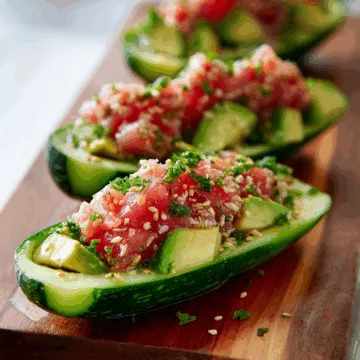
Avocado Tuna Cucumber Boats
Equipment
- 1 mixing bowl
- 1 cutting board
- 1 serving dish
Ingredients
- 1 large cucumber about 300g
- 1 ripe avocado about 150g
- 1 can tuna in water 5 oz, drained
- 2 tablespoons mayonnaise
- 1 tablespoon lemon juice
- 1 tablespoon chopped fresh dill or 1 teaspoon dried dill
- to taste salt
- to taste pepper
- optional toppings cherry tomatoes, radishes, or hemp seeds
Instructions
- Cut the cucumber in half lengthwise. Using a spoon, scoop out some of the seeds to create a boat-like shape.
- In a mixing bowl, mash the ripe avocado with a fork until smooth.
- Add the drained tuna to the mashed avocado, mixing until well combined.
- Stir in the mayonnaise, lemon juice, chopped dill, and season with salt and pepper to taste.
- Spoon the tuna mixture into the hollowed-out cucumber halves.
- If desired, top with cherry tomatoes, radishes, or hemp seeds for extra flavor and presentation.
- Serve immediately as a light meal or snack.