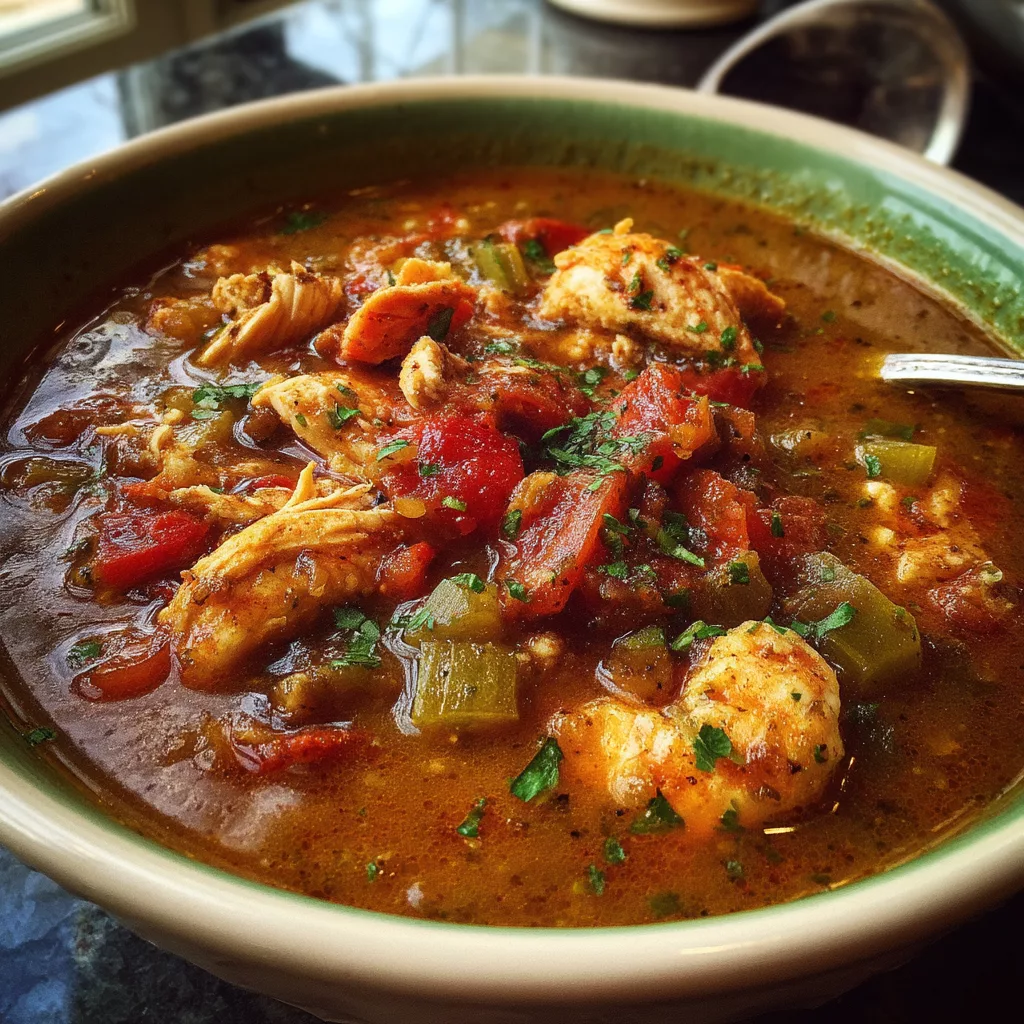
When i first tried chicken gumbo on a chilly evening i honestly didn’t know what to expect. The smell of spices, veggies, and chicken kinda wrapped around me, like a warm blanket. This stew wasnt just food, it felt like home, even if i was miles from Louisiana. It’s a dish that mixes lots of cultures and stories in one big pot.
Gumbo really comes from Louisiana where African, French, Spanish, and Native American cooks all added their own twist. Over time it’s changed, and you can find lots of versions now, but they all stay true to that Creole soul. Nowadays you might see it at backyard parties or fancy restaurants, because everyone loves its rich taste.
In this post i’ll explain what chicken gumbo is, share a bit of history, list out the stuff you need, give you a step-by-step recipe, and end with tips, variations, and serving ideas so you can make your own gumbo at home.
What is Chicken Gumbo?
Chicken Gumbo is a thick, savory stew thats a big deal in Southern cooking, mostly in Louisiana. At its core you got a roux (that’s flour cooked in oil or butter), then chicken, veggies, stock, and spices all coming together. It’s super flexible so you can swap stuff out based on what you have.
Some popular types are:
- Seafood Gumbo: uses shrimp, crab, fish or all of them for a sea taste.
- Sausage Gumbo: adds Andouille sausage for a smokey, spicy flavor.
- Vegetarian Gumbo: skips meat, loads up on beans and veggies for a veggie-packed version.
Chicken matters a lot in gumbo because the bone-in pieces give a deep flavor to the broth. Dark meat keeps it juicy, white meat keeps it lighter—either way it’s a staple in this stew.
Historical Background
The story of Chicken Gumbo is tied to Louisiana’s melting pot of cultures. Africans brought okra (the word “gumbo” comes from “nyombo,” the Bantu word for okra), the French taught folks how to make a roux, the Spanish shared spices, and Native Americans gave us file powder from sassafras leaves. All those bits mixed together made gumbo what it is today.
Over the years families passed down recipes, each one a little different, so everyone’s gumbo has its own story. Even now it’s still a dish that brings people together, no matter where you live.
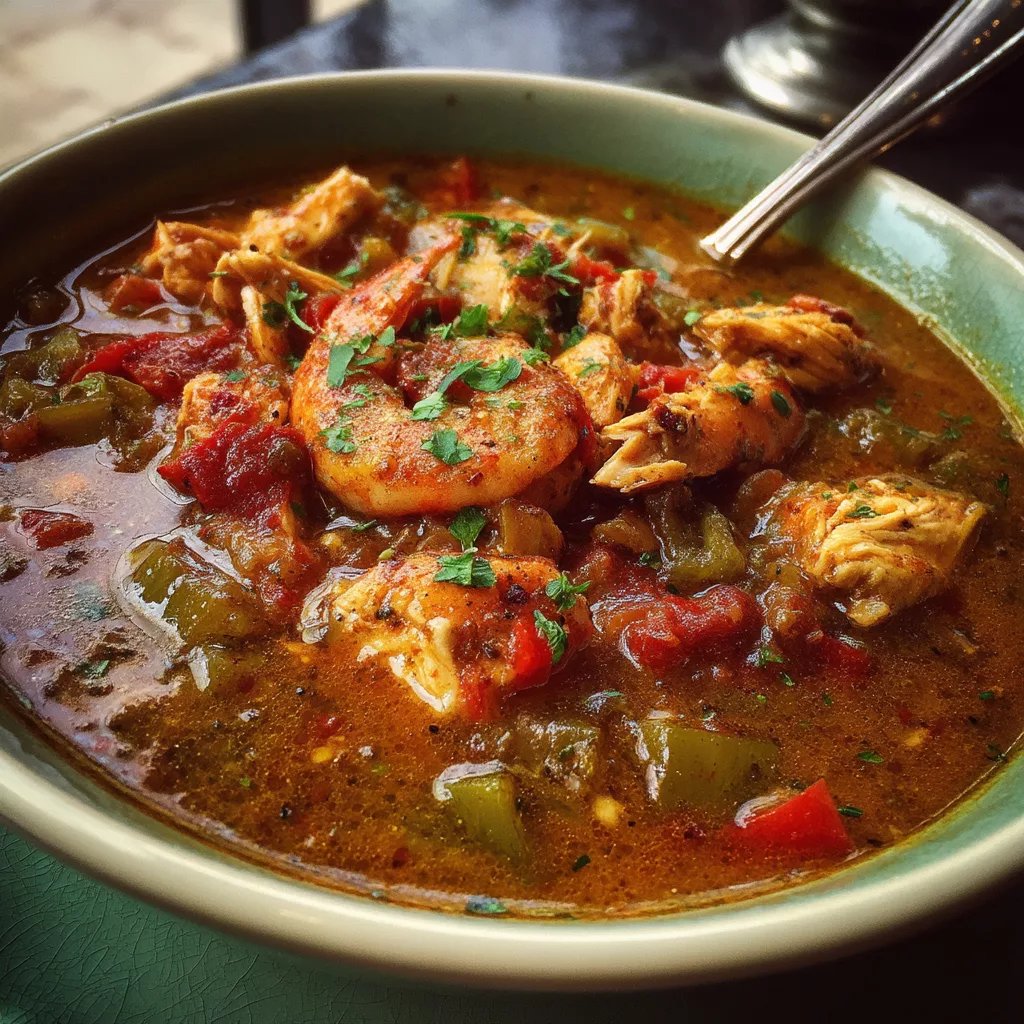
Ingredients Required
To make a tasty Chicken Gumbo, you’ll usually need:
Key Ingredients
- Chicken: bone-in, skin-on pieces. Dark meat for more juicyness, white for something lighter.
- Roux: equal parts flour and oil/butter, cooked till it’s deep brown—takes patience.
- Vegetables: the “holy trinity” of onions, bell peppers, and celery.
- Spices: Cajun seasoning, thyme, bay leaves—adds layers of taste.
- Stock: chicken stock or broth for rich liquid.
- Andouille Sausage: optional but gives a nice smokey edge.
Optional Add-ons
- Okra: fresh or frozen for extra thickness and flavor.
- Rice: long-grain white or brown rice to serve with your gumbo.
Detailed Recipe for Chicken Gumbo
Ingredients
- 2–3 lbs bone-in, skin-on chicken pieces
- 1 cup vegetable oil
- 1 cup all-purpose flour
- 1 large onion, diced
- 1 green bell pepper, diced
- 2 celery stalks, diced
- 4–5 cloves garlic, minced
- 1 tablespoon Cajun seasoning
- 1 teaspoon dried thyme
- 2 bay leaves
- 6 cups chicken stock
- 1 lb Andouille sausage, sliced (optional)
- 1–2 cups okra, sliced (optional)
- Salt and black pepper to taste
- Cooked rice for serving
Directions
- Make the Roux: heat oil in a big heavy pot over medium heat. Slowly whisk in flour and keep stirring for 20–30 mins till it’s dark brown, like chocolate. Be cautous not to burn it.
- Sauté Veggies: add onions, bell pepper, and celery to the roux. Cook 5–7 mins till soft. Stir in garlic and cook 1 more min.
- Brown the Chicken: season chicken with salt, pepper, and Cajun seasoning. Push veggies aside, add chicken, and cook 5–7 mins till it’s a little browned.
- Add Stock: pour in chicken stock and stir so roux dissolves. No lumps. Add bay leaves and thyme, then bring to a simmer.
- Simmer Away: turn heat to low and let it bubble gently for 1–2 hrs, stirring now and then. If you want, add sausage and okra halfway through. Taste and fix salt and pepper.
- Serve: spoon gumbo over rice in bowls. Top with parsley or green onions if you like.
Advice for Perfecting Chicken Gumbo
- Watch the roux closely—it can go from perfect to burnt real quick.
- Use good quality stock for the best flavor.
- Let it simmer longer if you can, it just gets better.
- Leftovers keep in the fridge up to 3 days, or freeze them.
- If it’s too thick later, stir in a little water or stock when you reheat.
- Don’t rush cooking the chicken or the roux, that’s where lots of flavor comes from.
Nutritional Information
- Calories: about 350–450 per serving, depends on what you add.
- Protein: hearty amount from chicken and sausage for muscle health.
- Vitamins: veggies give A, C, K and minerals like potassium.
- Antioxidants: herbs and spices help fight inflammation.
Serving Suggestions
- Bread: crusty French bread or warm cornbread is great for dipping.
- Sides: a green salad or coleslaw balances out the richness.
- Drinks: sweet tea, a cold beer, or a crisp white wine goes well.
Popular Variations of Chicken Gumbo
- Creole vs Cajun: Creole gumbo often has tomatoes and seafood, Cajun leans heavy on smoked meats.
- Healthier Versions: swap low-fat meats or add more veggies to lighten it up.
- World Twists: some cooks add local spices and ingredients for a new spin.
Cooking Equipment Needed
- Dutch oven: perfect for making roux and simmering the gumbo.
- Wooden spoon: stops the roux from sticking or burning.
- Measuring cups and spoons: important for the right flour, oil, and spices.
FAQs
People Also Ask Section
- What’s the difference between gumbo and jambalaya? Gumbo is a stew over rice, jambalaya cooks rice in the pot with meat and veggies.
- How do i thicken gumbo? Make a good roux, add okra, or stir in cornstarch slurry. File powder works too.
- Can i make it ahead? Yes, it tastes even better the next day. Just chill it in a sealed container.
- What goes with gumbo? Cornbread, rice, or a fresh green salad are all great sides.
- How do i store leftovers? Keep in the fridge for up to 3 days or freeze for later.
Conclusion
Hope you’re ready to feel the warmth of Chicken Gumbo in your own kitchen. This dish is more than food, it’s a piece of history and community in a bowl. Gather your friends or family, and dive into a pot of homemade gumbo that’s sure to become a favorite.
Call to Action
Tell us how your gumbo turned out or share your own twists in the comments! Follow this blog for more easy recipes and cooking hacks!
Chicken Gumbo
Equipment
- 1 Large pot or Dutch oven
- 1 Wooden spoon
- 1 Sharp knife
- 1 Cutting board
- 1 set Measuring cups and spoons
Ingredients
- 1 lb chicken thighs, boneless and skinless
- ½ cup vegetable oil
- ½ cup all-purpose flour For making roux.
- 1 large onion, diced
- 1 bell pepper, diced
- 2 stalks celery, diced
- 4 cloves garlic, minced
- 6 cups chicken broth
- 2 cups okra, sliced
- 2 teaspoons dried thyme
- 1 teaspoon cayenne pepper Adjust to taste.
- 2 teaspoons paprika
- 1 teaspoon salt
- ½ teaspoon black pepper
- 1 bay leaf
- 3 green onions, sliced for garnish
- cooked rice for serving
Instructions
- Begin by preparing the chicken thighs. Cut them into bite-sized pieces and set aside.
- In a large pot or Dutch oven, heat the vegetable oil over medium heat.
- Gradually add the flour to the hot oil, stirring continuously to make a roux. Cook the roux for about 20-25 minutes, until it reaches a dark brown color (similar to chocolate). Be careful not to burn it.
- Once the roux is ready, add the diced onion, bell pepper, and celery to the pot. Stir well and cook for about 5-7 minutes until softened.
- Add the minced garlic and cook for another minute until fragrant.
- Stir in the chicken broth, okra, chicken pieces, thyme, cayenne pepper, paprika, salt, black pepper, and bay leaf. Bring the mixture to a gentle boil.
- Reduce the heat to low, cover the pot, and simmer for 45 minutes, stirring occasionally, until the chicken is cooked through and tender.
- Remove the bay leaf before serving. Serve the gumbo over cooked rice and garnish with sliced green onions.