Intro To A Holiday Custard Treat
I love making dessert when the air turns crisp and every window holds a promise of snow. This year I decided to try something a bit different. I wanted to bring out the best in a classic custard with warm holiday spices. That idea turned into my Christmas Eve Cinnamon Vanilla Creamy Custard Pie. It has that gentle melt in your mouth texture that brings everyone close around the table.
My neighbor is totally obsessed over heat and how it shapes flavor. They kept nudging me to think about how the oven temperature and bake time would work. They even asked me to remember to let the custard rest after it comes out so the texture comes out just right. I kept recalling their tips each time I measured the cream and whisked the eggs.
By playing with low and slow heat the custard sets without curdling. Gentle cooking lets the cinnamon and vanilla fold right into the cream. Every time I flick the oven light on I check on that soft jiggle in the center. It reminds me of how Maillard browning shows up in savory cooking, only here I get a silky custard instead of a seared crust.
Heat Science In Simple Phrases
When I tell you that heat makes flavor you might think only of sizzling steaks. But when you bake a custard pie you need a steady warm bath not a blast of heat. The goal is to bring egg proteins up to just the right temperature. When they reach that point those proteins set and hold the custard together. Too high heat makes the eggs curl up and squeeze out liquid. Too low heat leaves the middle runny.
Here I am using a low and slow oven bath to get that perfect balance. The custard bakes evenly so you see a smooth pale top. At that stage you get no burning or cracking. And just like in caramelization we coax out gentle color changes while preserving moisture.
Then after the bake I let it sit. This protein rest time helps the filling firm up without drying out. It is a simple thing but without the pause the custard would slip away on each fork lift. Maybe that is why my neighbor never stops talking about resting time in cooking.
Pantry Line Up For Custard Pie
Before we dive in you want to pull together these items. It helps you move fast once the oven is hot. Make sure each ingredient is fresh to get the best taste.
- Whole Milk A cup plus half a cup Give the filling a gentle body.
- Heavy Cream One cup Adds richness and silkiness.
- Large Eggs Four of them They bind the custard as it cooks.
- Granulated Sugar Three quarters of a cup Sweetens and helps set the texture.
- Ground Cinnamon One teaspoon Warms the flavor profile.
- Pure Vanilla Extract One and a half teaspoons Lifts the overall taste.
- Salt A pinch Enhances all the flavors.
- Pie Crust One nine inch Use a ready made or your favorite homemade crust.
That list covers every element you need. No need to raid every shelf just to find some obscure spice. These pantry staples will let the Christmas Eve Cinnamon Vanilla Creamy Custard Pie shine without fuss.
Setting Up Your Tools And Stage
Get your oven rack in the lower third of the oven. Preheat to one hundred seventy five degrees Celsius or about three hundred fifty degrees Fahrenheit. I even place a shallow pan of hot water on the rack below. That trick adds humidity to the bake so the custard does not crack on top.
You also want a mixing bowl that can hold all your liquid ingredients comfortably. A whisk is best to blend without overworking the eggs. A fine mesh strainer is optional but helpful. If you want a silky filling pass the mixture through it to catch any ribbons of cooked egg.
A Warm Fragrance Before The Bake Begins
Once the oven is warming I combine the milk and cream in a small pot and bring it to a slow simmer. At this point the edges start to let off steam. That is your moment to pull it from the heat. You do not want a rolling boil or you risk scalding the dairy and making the proteins separate.
Meanwhile in a mixing bowl I whisk sugar, eggs, cinnamon and salt until well combined. The sugar helps draw moisture out of the eggs for a smooth custard. It is like in caramelization where sugar plays a key role. Then I slowly stream in the hot cream while whisking so the eggs do not cook on contact.
Mid Bake Check In
After I pour the filling into the crust I slide it into the oven rack above the pan of water. The water bath helps the custard set gently. My neighbor says it mimics low and slow cooking like a slow simmer but in an oven. I looked at them and realized they were right.
At about twenty five minutes mark I open the oven door for a quick look. I check if the edges are puffed and the center still has a slight wiggle. This is where you remember what heat control taught me. You want that jiggle but not a full liquid pool. It tells you the proteins are setting just right.
Probe And Timing Notes
I use an instant read thermometer to check the custard core. Aim for around seventy five degrees Celsius or one hundred sixty five degrees Fahrenheit. When you hit that point turn off the oven and leave the pie inside with the door ajar. This is all about protein rest so the filling finishes cooking gently from its own heat.
If you skip that pause the custard can crack or get uneven texture. During the rest the center firms up without drying around the edges. It is a quiet stage but crucial. It reminds me of how slow simmer in a stew brings flavors together without breaking down the meat too fast.
Plating With Extra Finesse
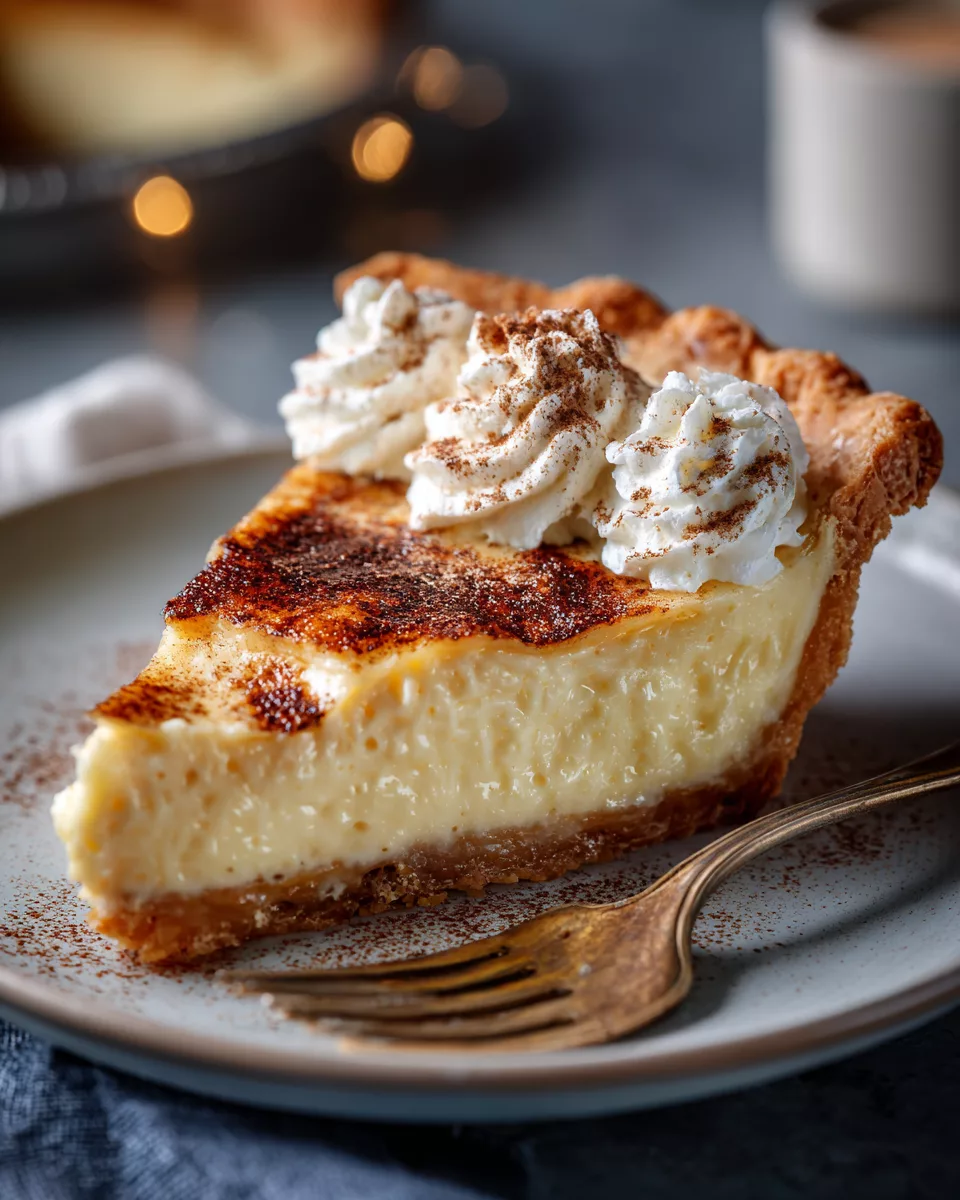
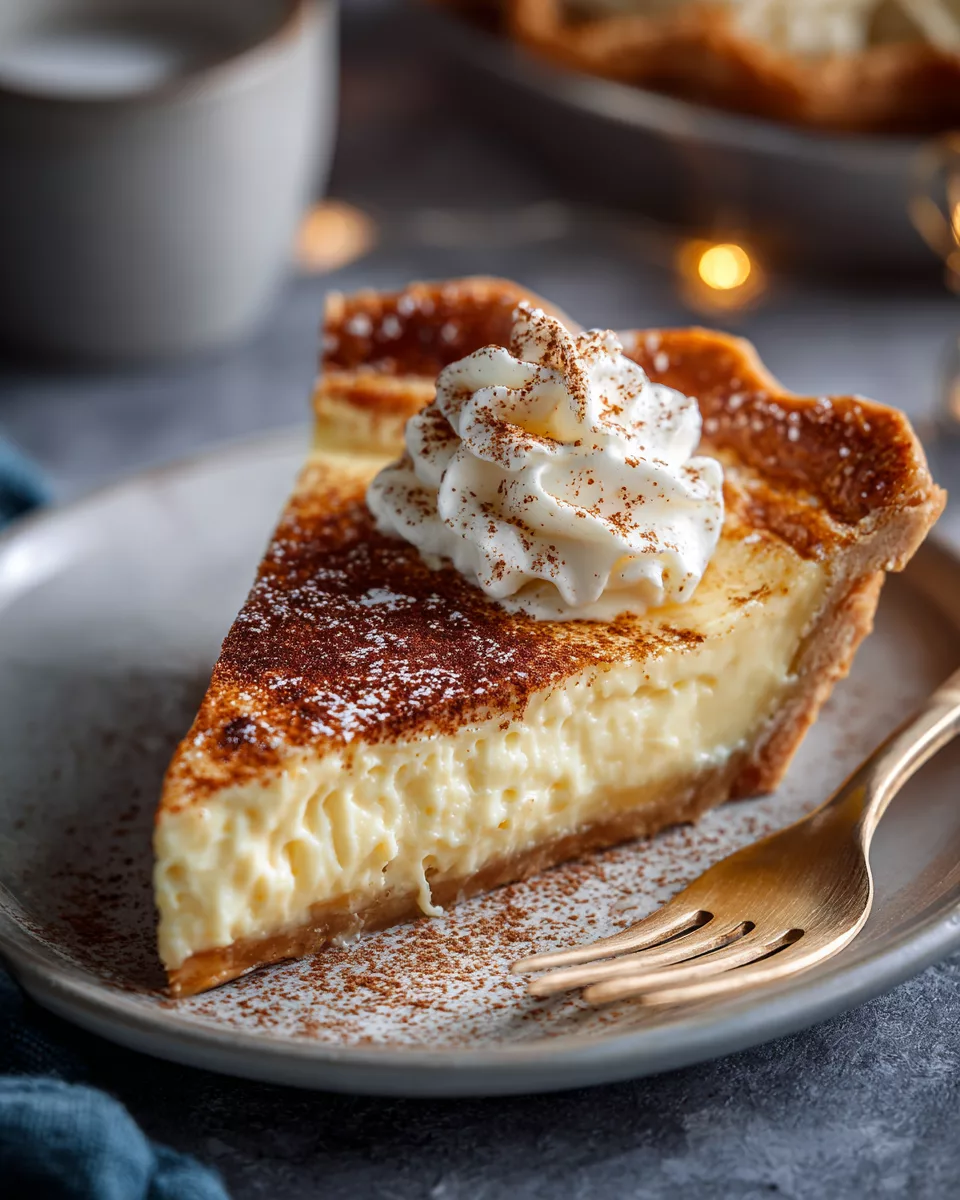
When the pie is fully cool and set you can move it to a serving plate. I like to dust the top with a light swirl of extra cinnamon. It gives a warm crown to the pie and hints at the flavors inside. A dollop of whipped cream or a scoop of vanilla ice cream makes it even more festive.
Slice it with a sharp knife dipped in warm water so the cuts are clean. Each wedge looks neat and the inside shows that creamy pale yellow. The tender filling stays in place and does not squish out when you lift your slice. That is the sign of proper Maillard browning and custard science working together.
Storing And Warming Leftovers
Cover any leftover pie with plastic wrap or place it in an airtight container. It will keep in the fridge for up to three days. The cinnamon and vanilla flavor get even more mellow as it rests. After a day you may find the custard holds shape even better.
To warm a slice gently set it in a low oven for five minutes or pop it in the toaster oven. You want to heat just enough so the filling softens. Do not blast it otherwise the custard could split and we do not want that. This is about low and slow time so the pie warms without drying.
Key Lessons And Quick Questions
Making this Christmas Eve Cinnamon Vanilla Creamy Custard Pie taught me to respect heat at every stage. From the slow simmer of cream to the water bath in the oven we guide the custard to set softly. Letting it rest after baking seals the deal by letting protein rest and avoid cracks. Every trick is simple but adds up to a perfect holiday dessert.
FAQs
What do I do if my custard cracks Wait until cool then trim the edges. Cover the crack with whipped cream or dust cinnamon on top. It hides any flaw.
Can I use evaporated milk instead You can but the texture will be thinner. I stick with whole milk and cream for richness.
How do I know when it is done Look for a slight jiggle in the center. A thermometer at sixty five Celsius or one hundred fifty Fahrenheit core also works well.
Why use a water bath in the oven It keeps the heat even and adds moisture so the top does not crack. It mimics low and slow cooking in a gentle way.
Remember each cook can add their own twist. Maybe a swirl of nutmeg or a pinch of cardamom. But these basics help you learn how heat shapes your holiday dessert flavor.
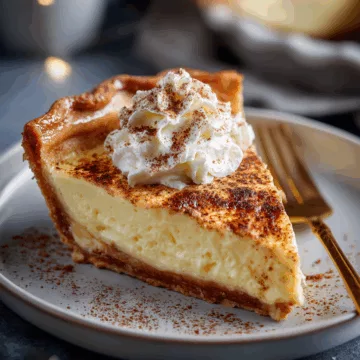
Christmas Eve Cinnamon-vanilla Creamy Custard Pie
Equipment
- 1 9-inch pie dish
- 1 mixing bowls
- 1 whisk
- 1 measuring cups and spoons
- 1 saucepan
- 1 rolling pin
- 1 baking weights or pie weights
Ingredients
- 1 9-inch pre-made pie crust
- 3 large eggs
- 1 cup granulated sugar
- 2 cups heavy cream
- 1 cup whole milk
- 1 tablespoon vanilla extract
- 1 teaspoon ground cinnamon
- ¼ teaspoon salt
- 1 tablespoon cornstarch
Instructions
- Preheat your oven to 350°F (175°C).
- Roll out the pre-made pie crust and place it in a 9-inch pie dish. Pinch the edges to create a decorative border. If desired, line the crust with parchment paper and fill it with pie weights or dried beans to prevent bubbling. Bake for 10 minutes. Remove weights and parchment, and bake for an additional 5 minutes until lightly golden. Remove from oven and set aside to cool.
- In a mixing bowl, whisk together the eggs and granulated sugar until well combined and slightly frothy.
- In a saucepan over medium heat, combine the heavy cream, whole milk, vanilla extract, ground cinnamon, salt, and cornstarch. Whisk continuously until the mixture is heated through but not boiling.
- Gradually pour the hot cream mixture into the egg and sugar mixture, whisking constantly to temper the eggs. Ensure the eggs do not scramble.
- Once combined, pour the custard filling into the baked pie crust. Smooth the top with a spatula.
- Bake in the preheated oven for 30 minutes, or until the custard is set and has a slight jiggle in the center.
- Remove the pie from the oven and allow it to cool at room temperature for at least 1 hour. Once cooled, refrigerate for at least 2 hours before serving.
- Slice and serve chilled, garnished with a sprinkle of cinnamon or whipped cream if desired.