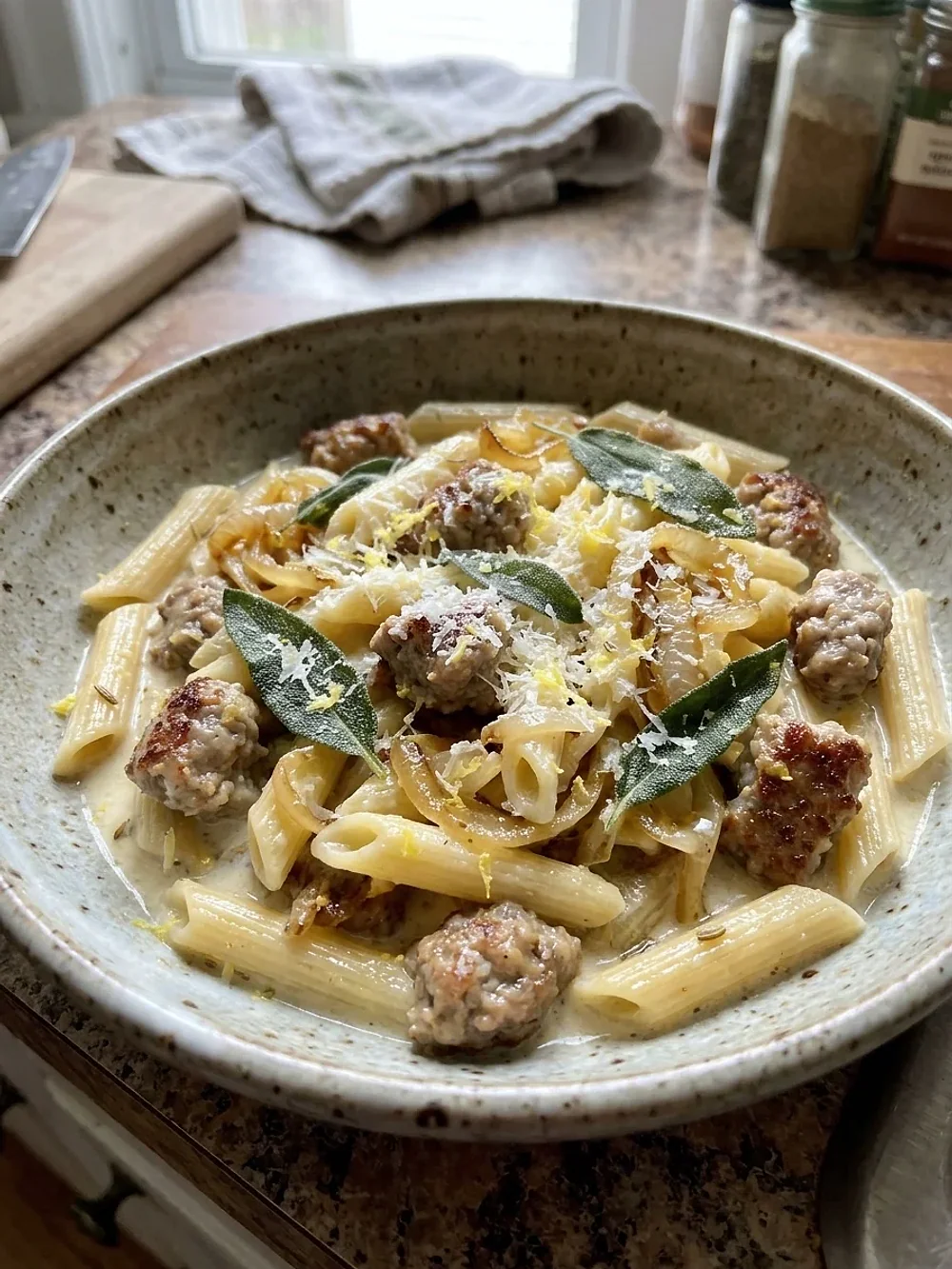
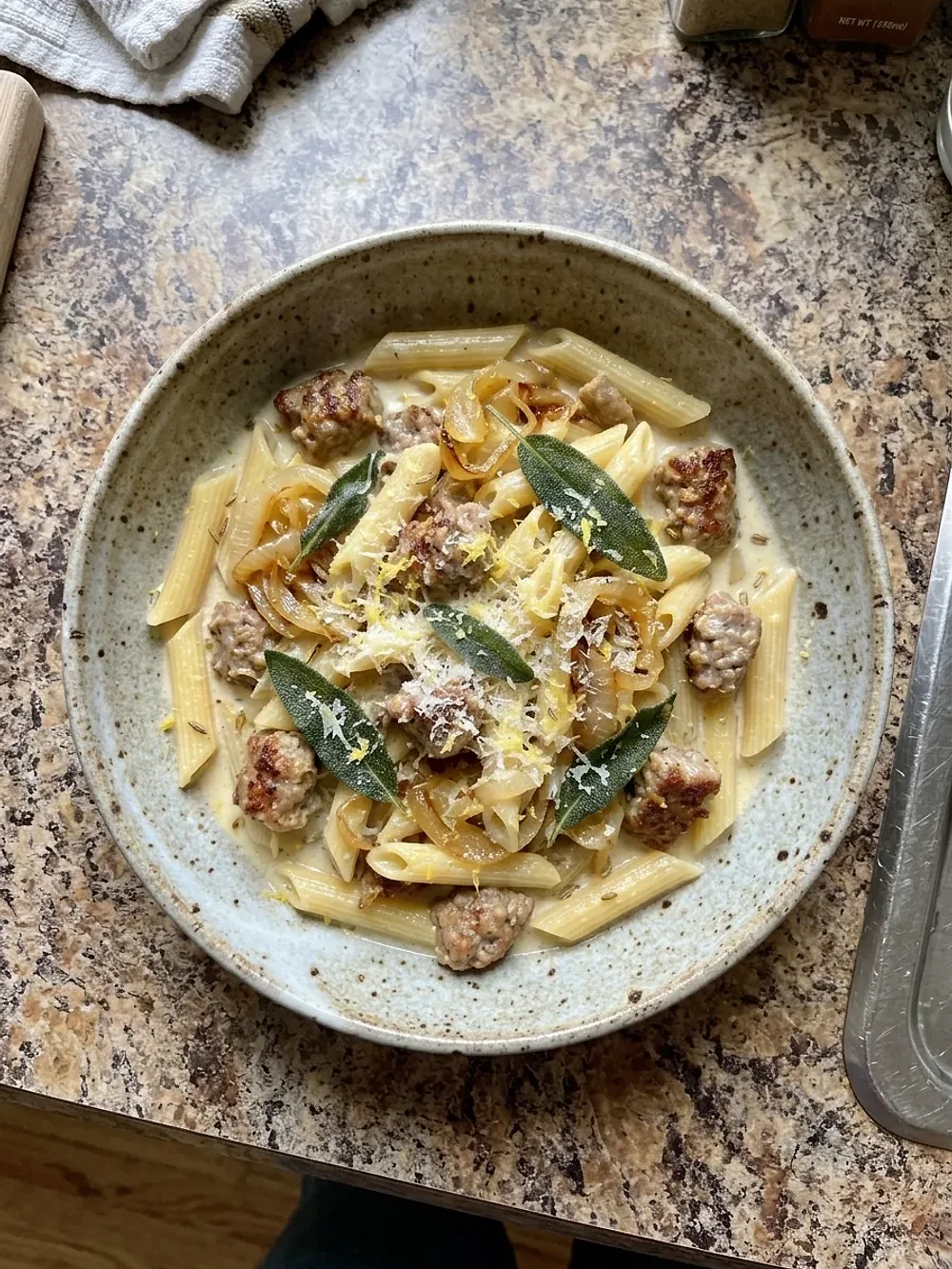
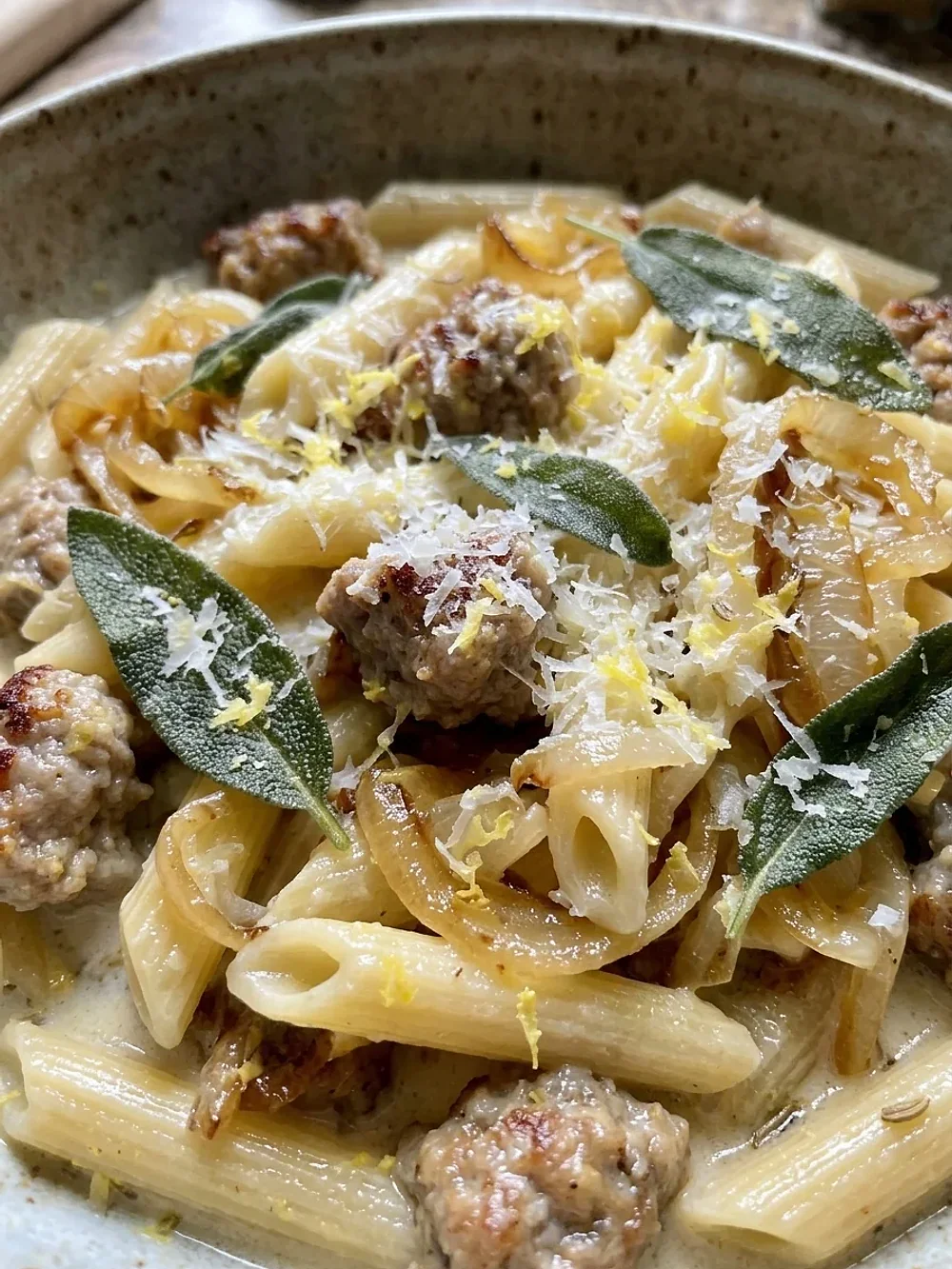
Creamy sausage pasta is browned fennel sausage and sage folded into a lemony parmesan cream that coats every piece of pasta.
Prep takes 10 minutes and cooking takes 20. It serves 2, and it's the kind of dinner you can pull off after work without a plan or a long shopping list.
The one technique that matters is keeping the cream at a gentle simmer, because a hard boil turns the sauce greasy. Everything else is browning, whisking and tossing.
What makes it rich but not heavy
The sausage is the seasoning here. Pork and fennel sausage brings salt, fat, pepper and a faint sweetness, so you don't need a long spice list, and the browned bits it leaves behind give the cream its savory backbone.
I like pork and fennel sausage best, and I'd pick it over anything milder.
The cream amount looks modest for 200 grams of pasta, and that's deliberate. A lot of creamy sausage pasta ends up stodgy because there's too much sauce, but here the parmesan melts in and thickens the cream, and the starch clinging to the pasta tightens it further.
Add more cream and you'd end up with soup.
Lemon is what keeps you reaching for another forkful. The juice cuts through the fat, and the zest on top adds a floral, fresh smell that plain cream never has.
Skip the lemon and the whole dish tastes flat.
The onions get cooked gently until soft and glassy, with no browning. That gives you sweetness without competing with the sausage, and I'd rather leave out the onion than the lemon if I had to choose.
Ingredients and what to swap
- Dried pasta: a short shape with ridges or hollows, like rigatoni, penne or orecchiette, catches the sausage crumbles and the sauce, and it's what I'd choose every time. Spaghetti works, but the sausage slides off. Gluten-free pasta is fine too, though you should pull it a bit earlier because it goes soft fast in the sauce.
- Sausage: it browns, seasons the cream and supplies the fat. Italian sausage, sweet or hot, is an easy swap, and hot makes the sauce spicier. Chicken sausage is leaner, so you get less browning and a lighter sauce. Any sausage works once you squeeze the meat out of its casing.
- Butter and onion: butter cooks the onion gently and then browns the meat, and the onion adds sweetness. Olive oil can replace the butter, but you lose a little richness. Sliced shallots are milder than yellow onion, while red onion tastes sharper and turns a dull color.
- Fresh sage and fennel seeds: sage adds an earthy, piney note that suits pork. Fresh thyme is the closest swap, and rosemary works if you use less. Dried sage is much stronger, so use far less of it. The fennel seeds are optional, and I'd skip them if your sausage is already heavy on fennel.
- Cream: it makes the sauce silky and carries the cheese. Half-and-half is a lighter swap, but it's thinner and splits more easily if it simmers too hard. Heavy cream is the most forgiving choice.
- Parmesan: it thickens and seasons the sauce. Grate it finely from a block, because pre-shredded cheese melts grainy. Pecorino is a sharper, saltier swap, so taste before you add more salt.
- Lemon: the juice brightens the sauce and the zest finishes it. A splash of white wine vinegar can stand in for the juice, but you lose the fresh lemon smell.
How to cook it
Chop and measure everything first, because the sauce moves fast once the sausage hits the heat. Boil the pasta in well-salted water, scoop out a mug of the cooking water before you drain, and pull the pasta a minute before the package says it's done. I always pull it a full minute early, since it finishes cooking in the sauce and stays springy instead of soft.
Melt 1 tablespoon of butter over medium heat and cook the sliced onion for 5 to 6 minutes, adding a pinch of salt halfway through. You want it soft and glassy, not golden. Browned onions would turn the sauce muddy, so keep the heat honest.
Set them aside.
Add the second tablespoon of butter, turn the heat to medium-high and crumble in the sausage, breaking it up with a wooden spoon. Give it 3 to 4 minutes and don't stir constantly. Leaving it alone lets the underside brown, and those browned bits are the base of the sauce. It's done when no pink is left (160°F if you want to check).
Add the sage and fennel seeds and cook for 30 seconds to 1 minute, just until it smells toasty and the sage looks slightly crisp at the edges.
Now lower the heat, push the meat to one side and pour in the cream. Keep it at a very gentle simmer, with tiny bubbles at the edges and never a boil, because boiling cream with sausage fat can split. It'll look thin and a little orange from the fat. That's fine.
Whisk in the parmesan in two additions, letting the first melt completely before adding the second. Dumping it all in at once makes clumps. Then quickly whisk in the black pepper and lemon juice. The sauce will still look loose, and that's right, because it thickens as the pasta soaks it up.
Add the drained pasta and the onions, toss well and let it bubble gently for a minute or two. When the sauce turns glossy and coats a spoon, it's ready. Does it need salt? Taste first, since sausage and parmesan vary a lot, and I always taste before adding any. If it looks tight, loosen it with a splash of pasta water, then finish with extra parmesan and lemon zest. That glossy sauce clinging to the pasta is exactly what you're after!
Tips for a smooth, glossy sauce
- Grate the parmesan yourself. Pre-shredded cheese is coated to stop clumping in the bag, and that coating keeps it from melting smoothly into the cream. Finely grated cheese from a block disappears into the sauce in seconds.
- Keep the cream below a boil. A hard boil makes the fat separate and leaves you with a greasy, slightly grainy sauce. If it does split, take it off the heat and whisk in a splash of cream or pasta water until it comes back together.
- Save pasta water before you drain. The starchy water loosens the sauce without thinning the flavor. Add it a splash at a time, because it's easy to overshoot and the sauce keeps thickening as it sits.
- Brown the sausage without fussing. Constant stirring steams the meat and leaves it pale and soft. Let it sit for a minute between stirs so the crumbles pick up color and crisp edges.
- Serve it right away. The sauce tightens within minutes of leaving the heat. I'd rather have people wait for the pasta than the other way around!
Easy variations to try
Use hot Italian sausage if you want heat, or add a pinch of chile flakes with the sage. Chicken sausage gives you a lighter version, and an extra bit of butter helps it brown.
For greens, stir a handful of baby spinach into the finished sauce and let it wilt for about a minute. I like that version a lot, because the spinach adds freshness and a little color. Frozen peas work the same way. If you want mushrooms, brown them with the sausage so they pick up the same browned bits.
I'd skip anything sweet or heavy, like sun-dried tomatoes in oil. The sauce is already rich, and it needs the sharpness of lemon to stay balanced.
Storing and reheating leftovers
- Keep leftovers in an airtight container in the fridge for up to three days.
- Reheat gently over low heat with a splash of cream or pasta water, stirring until the sauce loosens and turns glossy again. The pasta will be softer than the first time, and the sauce will have thickened a lot.
- You can freeze it for up to 2 months, but the cream may turn slightly grainy when it thaws, so I'd only do it if you have to.
Serve creamy sausage pasta with a peppery arugula salad dressed in lemon and olive oil, and pour a crisp Pinot Grigio or Sauvignon Blanc if you're having a glass. The acidity in both handles the cream well.
Frequently asked questions
Can I make creamy sausage pasta without cream?
You can use half-and-half, which gives you a lighter sauce, but keep the heat low because it splits more easily. Milk isn't a good swap, since it can curdle once the lemon juice goes in. If you want something thicker, you'll need real cream.
Can I use pre-cooked sausage?
Yes, but raw sausage gives a better sauce. As it browns it renders fat and leaves behind the browned bits that flavor the cream. If you use cooked sausage, slice it thin and add a little extra butter so it still gets some color.
Can I add white wine?
A splash of dry white wine works after the sausage has browned. Let it bubble until it's almost gone, then add the cream. You'll still want the lemon juice, because the wine adds acidity but not the fresh lemon smell.
How do I know when the sauce is thick enough?
It should coat the back of a spoon and leave a clear line when you drag your finger through it. Remember that it keeps thickening off the heat as the pasta absorbs it. If it's too thick, add a splash of pasta water and toss again.
Best Creamy Sausage Pasta Recipe
Equipment
- Large pot
- Large skillet
- Wooden spoon
- Whisk
- Plate
Ingredients
For the Pasta
- 200 grams dried pasta (see notes)
- 2 tablespoons butter (divided)
For the Sauce
- ½ large yellow or brown onion (cut into thin slices)
- 220 grams sausages (about 3 sausages casings removed and meat squeezed out (I use pork and fennel))
- 1 ½ tablespoons fresh sage leaves (roughly chopped)
- ½ teaspoon fennel seeds (optional, see notes)
- ¾ cup cream
- ½ teaspoon black pepper
- 50 grams parmesan (finely grated)
- 1 tablespoon fresh lemon juice
For Serving
- Lemon zest and extra parmesan to serve
Instructions
- Cook the pasta in a large pot of well salted water according to package instructions, undercooking it by about a minute so it can finish cooking in the sauce.
- Melt 1 tablespoon of butter in a large skillet over medium heat and gently fry the onion slices for 5 to 6 minutes with a pinch of salt halfway through, stirring occasionally until soft and glassy without browning.
- Transfer the onions to a plate and set aside.
- Melt the remaining 1 tablespoon of butter in the skillet over medium-high heat and add the sausage meat, breaking it up with a wooden spoon while allowing it to brown for 3 to 4 minutes until cooked through without stirring too frequently.
- Add the sage and fennel seeds if using and cook for 30 seconds to 1 minute until fragrant.
- Lower the heat, push the meat to one side of the pan, and add the cream, keeping it at a very gentle simmer without letting it boil.
- Whisk in the parmesan in two separate additions, allowing each to fully melt into the cream before adding the next, then quickly whisk in the black pepper and lemon juice.
- Add the cooked pasta and reserved onions directly to the sauce, toss well, and let it bubble gently for a minute or two, then taste for seasoning and add sea salt as needed.
- If the pasta seems too thick, add a splash of pasta water to loosen it, then serve with extra parmesan and lemon zest on top.
Notes
- Undercooking the pasta by a minute before adding it to the sauce prevents it from becoming overcooked as it finishes cooking in the gentle simmer.
- Store leftovers in an airtight container in the refrigerator for up to three days and reheat gently over low heat with a splash of cream or pasta water to restore the sauce consistency.
- You can substitute the pork and fennel sausages with Italian sausage, chicken sausage, or remove the casing from any sausage variety you prefer.
- To speed up preparation, have all ingredients chopped and measured before you start cooking, as the cooking process moves quickly once you begin.
- This pasta pairs well with a crisp white wine like Pinot Grigio or Sauvignon Blanc that complements the rich cream and bright lemon flavors.