Whole chicken recipes go wrong at the browning step, and most people rush it. The skin leaves the heat pale gold when it should be the color of dark honey, and that one shortcut separates a forgettable roast from a bistro-level one. Get the sear right and the kitchen fills with the smell of browned butter, thyme and white wine, and the skin crackles when a knife touches it.
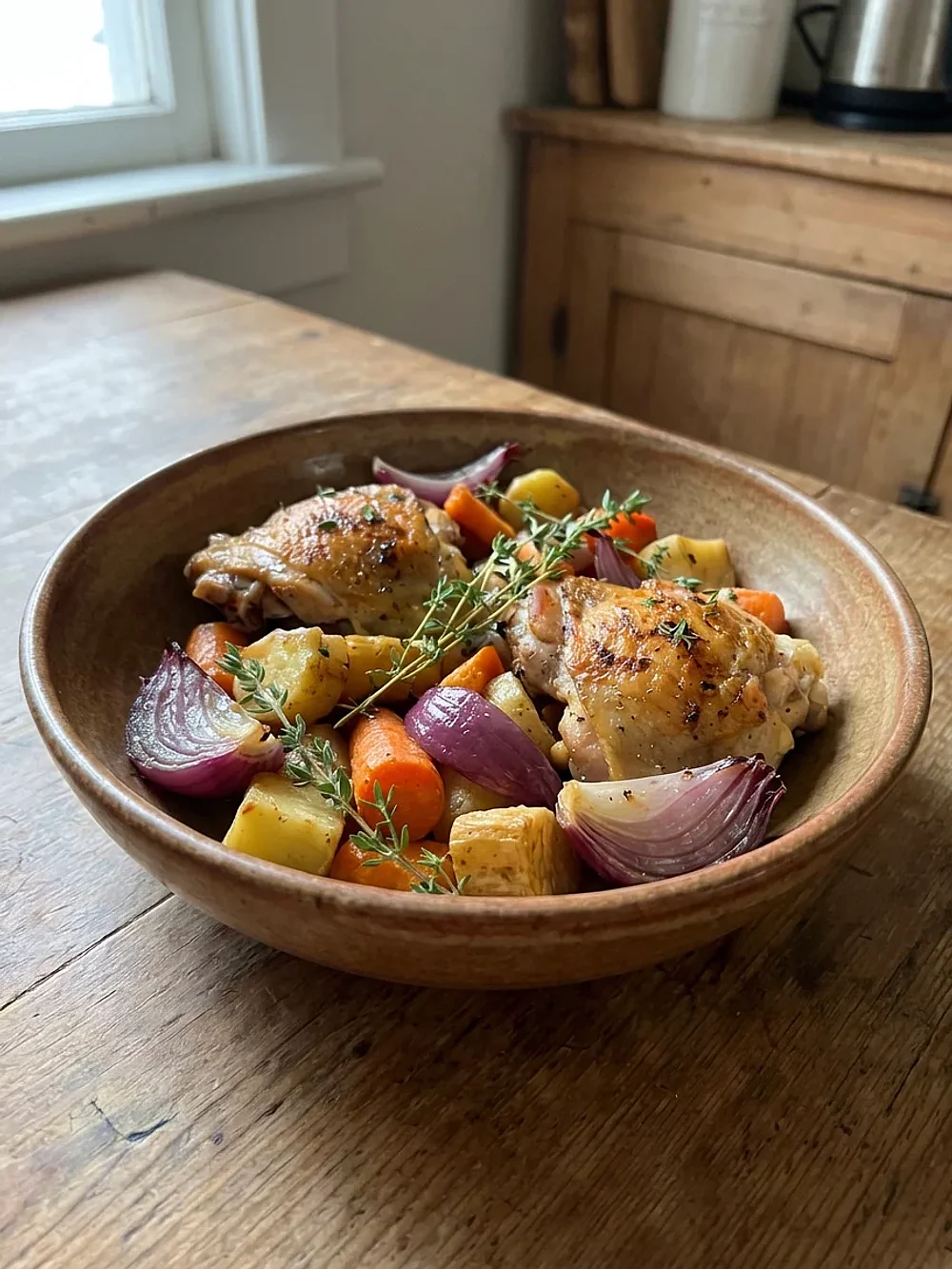
Here's the fix, start to finish, including the details that keep the vegetables from going to mush.
How this recipe comes together
Pale skin is the usual complaint, and it comes from skipping the stovetop. Browning the chicken for about 15 minutes before it ever sees the oven builds the deep, roasted flavor that a straight bake can't. The oven then finishes the job gently, with the bird sitting above vegetables that catch every drip.
That's why this method suits a cold Sunday, like those November cold snaps when the oven is a welcome excuse to stay in. It serves 4, and it needs almost no attention once the lid-covered roast begins. You get a whole dinner, the meat, the vegetables and a loose, savory sauce, from one continuous process.
Here's a counterintuitive fact worth knowing. Season the outside of the chicken only. Salt sprinkled inside the cavity barely reaches the meat, while salt on the skin draws out surface moisture and helps it brown. Dry skin is the entire game, so pat the bird thoroughly with paper towels first.
Your Ingredient Guide
Three vegetables from the list is the right number, not five. Fingerling potatoes, carrots and parsnips make a reliable trio, though golden beets, butternut squash and fennel work just as well. Cut everything into generous 3-inch pieces so nothing disintegrates during an hour in the oven. The onion goes in as 16 wedges cut through the root, which keeps each wedge intact instead of falling into loose layers. A 3 ½-pound bird is the target size. Fresh thyme, rosemary or tarragon all work, and dried herbs should be used at one-third the amount. For the wine, any dry white you'd happily drink will do. If you'd rather skip alcohol, ¼ cup of chicken broth does the same job of loosening the sauce.
The rundown
Heat the oven to 400°F before anything else, then get the olive oil shimmering over medium-high heat on the stovetop. Season the dried chicken all over with kosher salt and pepper. Lay it in breast-side down and listen for a steady, confident sizzle.
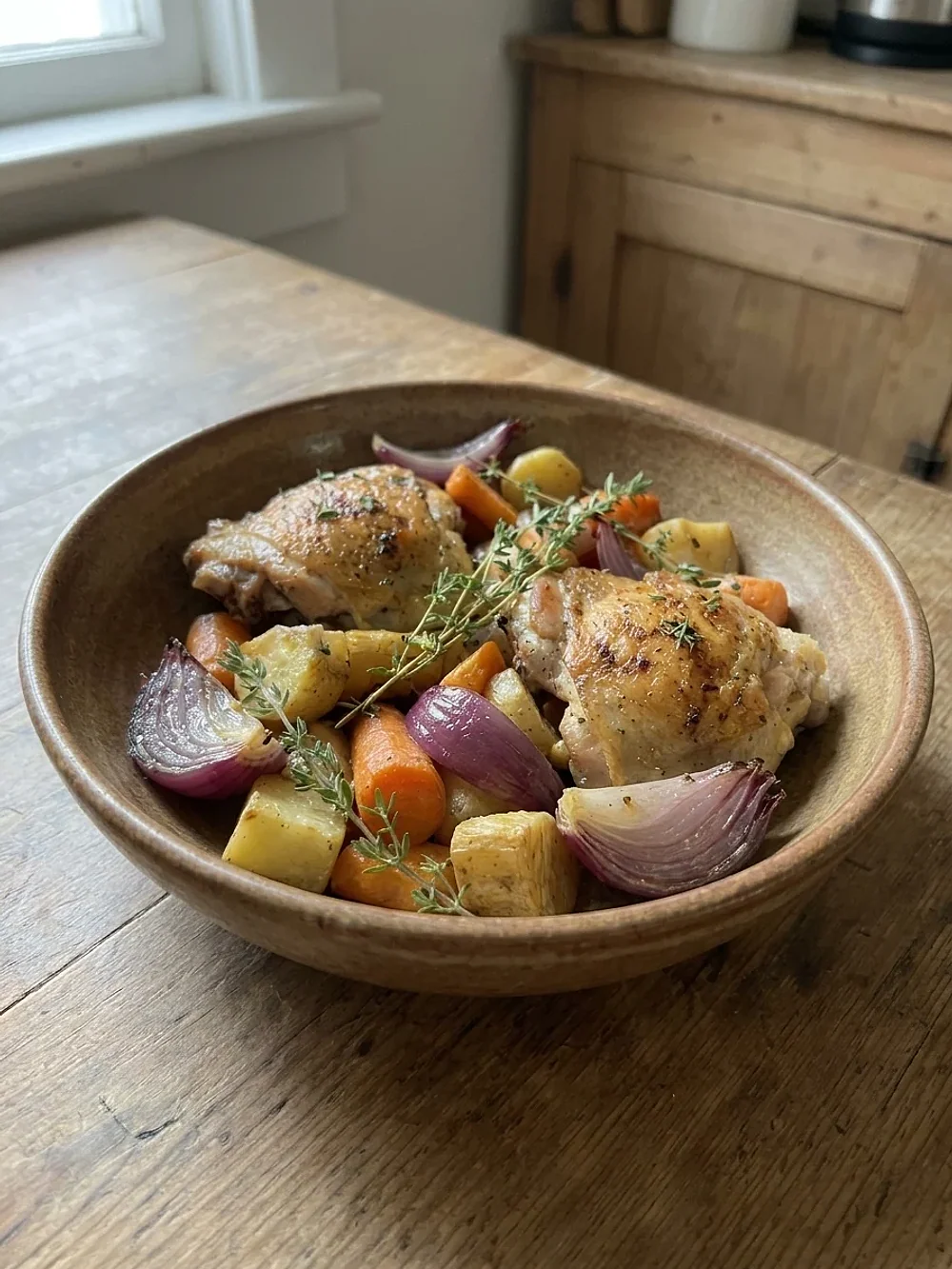
Turn the bird to brown on three sides: the breast, then each leg and thigh section. A wooden spoon anchored in the cavity and a pair of tongs make the turning easy without piercing the skin, which would let juices escape. Prop the chicken against the side when it needs support. Plan on about 15 minutes total until it looks deeply, evenly mahogany.
Move the chicken aside and turn the heat off. Swirl 2 tablespoons of butter into the drippings until it melts, then toss in the vegetables, onion wedges and herbs. Coat everything in the butter, season lightly, and push the vegetables to the sides.
Set the chicken back in the center, breast side up, and pour the ¼ cup of wine over it. Cover and roast for about 1 hour, until an instant-read thermometer reads 165°F in the thickest part of the thigh. The steam inside the covered roast makes the vegetables tender and the meat juicy.
Carve right at the table, or move the chicken to a cutting surface for a tidier presentation. Spoon the braised vegetables and sauce alongside. That first bite should give you crisp-edged skin, soft sweet carrots and a sauce that tastes of wine and thyme.
Where people go wrong
Most people get this wrong: they treat the cooking times as the finish line and ignore the cues along the way. These are the mistakes that quietly flatten whole chicken recipes.
- Wet skin going into the heat. Moisture steams instead of browning, so the skin turns rubbery. Here's the fix: pat the bird dry with paper towels, then pat it again.
- Crowding or pale browning. Pulling the chicken after 6 or 7 minutes leaves the skin blond and the flavor thin. Here's the fix: keep going for the full 15 minutes, turning to brown all three sides.
- Tiny vegetable pieces. Cubes under an inch dissolve long before the chicken is done. Here's the fix: cut everything into 3-inch chunks, and the onion into 16 wedges through the root.
- Guessing doneness. Color and juices can mislead you, and an overcooked breast is dry no matter how good the sauce is. Here's the fix: check the thickest part of the thigh for 165°F.
Mix and match ideas
Parsnips and fennel turn sweet and almost buttery after an hour with the chicken, so that pairing suits anyone who likes a mellow, roasted-root flavor. Beets bring earthiness and color, and golden ones won't stain everything pink. Butternut squash collapses slightly into the sauce, which thickens it.
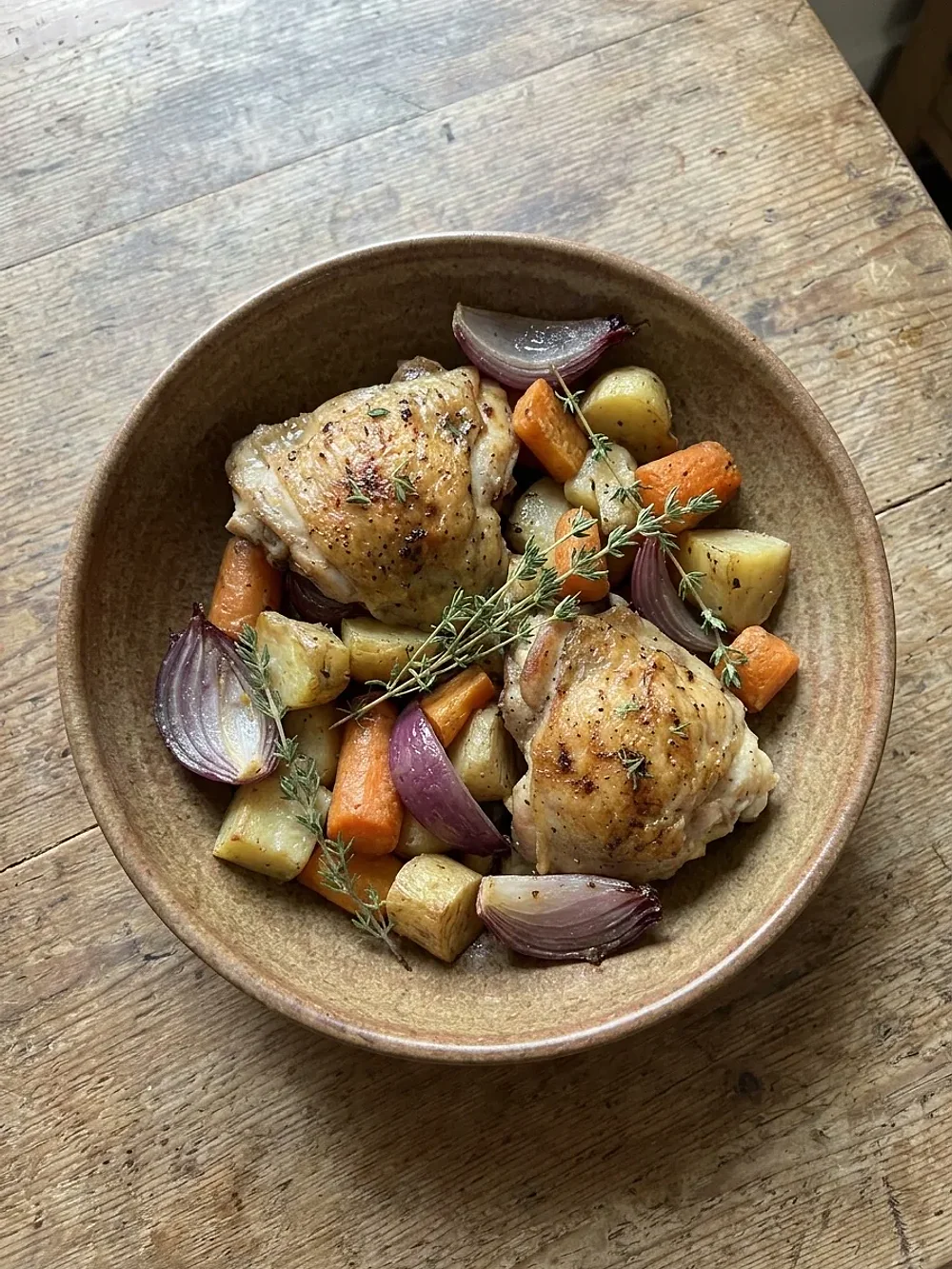
For serving, crusty bread is nearly mandatory, since the liquid at the bottom is the best part of the meal. A simple salad of bitter greens with lemon cuts through the richness of the butter and the skin. And whole chicken recipes like this one don't need a side starch, because the potatoes already cover it.
Make It Your Own
- Tarragon and a splash of cream. Use tarragon as the herb, then stir 2 tablespoons of cream into the sauce at the end for a French-bistro feel.
- Lemon and fennel. Choose fennel as one of the three vegetables, add the zest of one lemon with the herbs, and finish with a squeeze of juice.
- Autumn squash version. Use butternut squash, carrots and red onion with rosemary. The squash softens into the sauce and gives it body.
The Details That Matter
- Use the weather as a guide. During a humid summer week, leave the chicken uncovered in the fridge for an hour before cooking. The skin dries out and browns noticeably better.
- This is the move for a weeknight dinner party. Brown the chicken and prep the vegetables earlier in the day, so assembly takes five minutes when guests arrive. The oven does the rest while the conversation happens.
- Skip the fancy herb blend. Use whatever single herb is already in the fridge and nobody can tell. One teaspoon of chopped thyme or rosemary is plenty.
- Treat the juices like gold. In French home cooking, the liquid left behind is considered the best part, and bread is there to mop it up. A spoonful over each portion beats any store-bought gravy.
- Day-two leftovers become chicken salad. Shred the cold meat, fold in a little mayonnaise and chopped roasted carrot, and pile it onto toast. Keep leftovers in an airtight container in the fridge for up to 3 days, and reheat gently in a 300°F oven.
🍽️ Perfect pairing: a glass of the same dry white used in the cooking, plus a loaf of crusty bread for the sauce. Whole chicken recipes don't get much more reliable than this one, because the browning, the butter and the covered roast do almost all the work.
Questions That Come Up
What's the one mistake that ruins whole chicken recipes?
Rushing the browning. Pale, damp skin never recovers in the oven, so dry the bird well and give it the full 15 minutes on the stovetop until it's deeply golden on all three sides.
Can I use a bigger or smaller bird?
Stay close to 3 ½ pounds if you can. A larger chicken will need more than the 1 hour in the oven, so rely on a thermometer reading 165°F in the thigh instead of the clock.
Can I skip the wine in whole chicken recipes like this?
Yes. Replace the ¼ cup of wine with the same amount of chicken broth, and add a small squeeze of lemon at the end to bring back the brightness.
Why are my vegetables mushy?
They were cut too small. Pieces about 3 inches long hold their shape for the full hour, and the onion stays intact when cut in wedges through the root.
One-Pot Roast Chicken a la Julia Child
Equipment
- large Dutch oven with lid
- Tongs
- Wooden spoon
- instant-read thermometer
- Large bowl
- Cutting board
- Knife
Ingredients
For the Chicken
- 1 tablespoon extra-virgin olive oil
- Kosher salt and pepper
- 1 3 ½- pound chicken, giblets removed, rinsed and dried with paper towel
For the Vegetables and Braising
- 2 tablespoon unsalted butter
- 2 pound mixed vegetables (choose 3: fingerling or purple potatoes, parsnips, carrots, golden beets, butternut squash, fennel), cut in generous 3-inch pieces (so they don't overcook)
- 1 medium red or yellow onion, peeled cut in 16 wedges through the root (so the wedges stay intact)
- 1 teaspoon chopped fresh thyme, rosemary, or tarragon
- ¼ cup white wine
Instructions
- Preheat the oven to 400°F. Heat the olive oil in a large Dutch oven over medium-high heat and season the chicken all over (not inside) with salt and pepper. Brown the chicken on 3 sides (breasts and 2 leg/thigh sections) until browned all over, about 15 minutes total, using tongs and a wooden spoon anchored in the cavity to turn it easily and propping it against the pot side as needed.
- Remove the chicken and set aside in a large bowl. Turn off the heat, add the butter and swirl until melted, then add the vegetables, onion wedges, and herbs. Toss to coat with butter, season lightly with salt and pepper, and move the vegetables to the sides of the pot. Place the browned chicken breast side up in the center, pour ¼ cup white wine over it, cover, and transfer to the oven to roast until an instant-read thermometer registers 165°F in the thickest part of the thigh, about 1 hour.
- Carve the chicken in the pot or transfer to a cutting board for a more elegant presentation. Serve with the braised vegetables and sauce on the side.
Notes
- Tip 1: Use a wooden spoon anchored in the cavity to easily turn the chicken without piercing the skin, preventing juices from escaping.
- Tip 2: Cut vegetables into generous 3-inch pieces so they roast evenly with the chicken without overcooking.
- Tip 3: Substitute the fresh herbs with dried versions using one-third of the amount, or choose whichever herb you have on hand.
- Tip 4: Save time by preparing and cutting all vegetables before browning the chicken so assembly is seamless.
- Tip 5: Serve with crusty bread to soak up the delicious braising liquid and pan sauce from the bottom of the pot.