
Slow cooker beef stew is a big batch of chuck roast and vegetables that cooks down into a thick, savory broth you'll want to drag bread through. Almost all of the work is walking away.
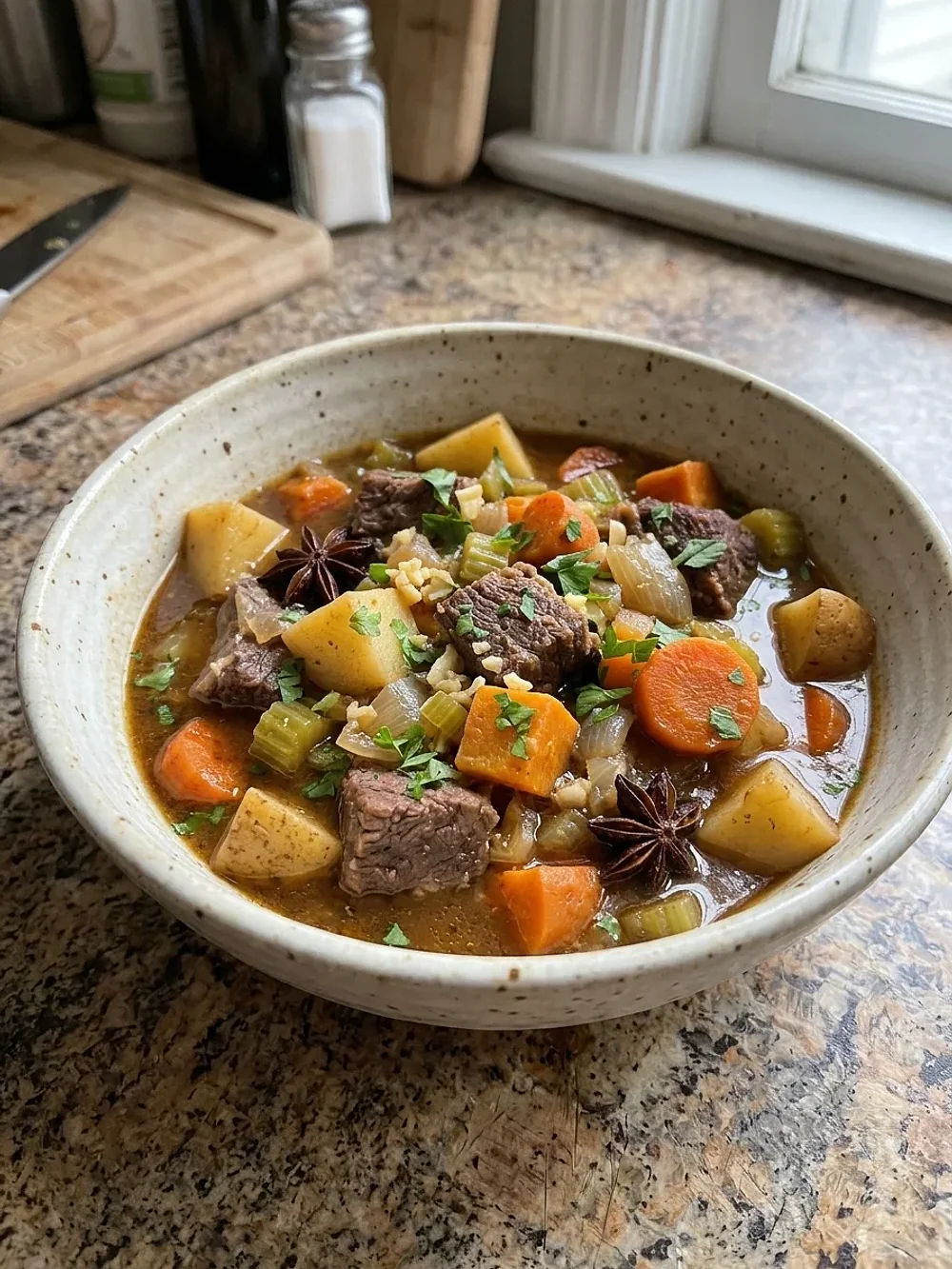
The one step that needs you is browning the beef in batches, and I think it's worth the extra 15 minutes. That crust, plus tomato paste and balsamic cooked down briefly, gives the broth a roasted depth that dumping everything in raw never reaches. You also get russet potatoes that go soft at the edges and thicken the broth on their own, plus carrots, celery and sweet potato for a little sweetness.
Prep takes about 30 minutes, and the rest is hands-off.
What gives it deep flavor
Chuck roast is the cut that makes this work. It's full of connective tissue, which is tough at first and turns silky after hours of low heat, so the beef ends up tender and the broth gets a body that boxed stock can't manage alone. Lean cuts like round or sirloin go dry and stringy in the same time, so I wouldn't swap them in.
Browning does the rest of the heavy lifting. A flour-dusted crust caramelizes in hot oil and leaves browned bits behind, and those dissolve into the onion, garlic, tomato paste and balsamic. Skip it and slow cooker beef stew still works, but it tastes flatter and a little boiled.
Six tablespoons of tomato paste sounds like too much until you taste the broth.
Cooking the paste for a minute with the balsamic takes off its raw, tinny edge and turns it brick red and sweet. The russets help too, because they soften and shed starch that thickens the stew without any extra work. I like the sweet potato for the same reason, plus the color it brings.
Here's an honest warning. The stew will look thin when the cooking time is up. That's normal; it thickens a lot as it cools, and overnight in the fridge it turns properly spoonable.
Ingredients and smart swaps
- Beef chuck roast: This is the body of the dish, and its collagen melts into the broth over hours. Boneless short rib is the best swap, since it's richer and fattier. Brisket flat works too, but it's leaner and ends up sliceable rather than shreddy.
- Flour coating (flour, salt, pepper, onion powder, Italian seasoning): It builds the crust on the beef and gives the broth a slight head start on thickening. Gluten free flour works one for one. Arrowroot starch (paleo) gives a thinner, paler crust, and almond flour (low carb) tastes a little nutty and thickens less.
- Tomato paste and balsamic vinegar: They give you sweetness, acid and savory depth all at once. Red wine vinegar can stand in for balsamic, but it's sharper and less sweet, so add it a little at a time. Use a compliant brand of balsamic if you're doing Whole30.
- Worcestershire sauce: A small amount adds tang and a meaty, fermented depth. Soy sauce is the easy swap, but it's saltier and lacks the tang, so taste before you add more salt at the end.
- Russet potatoes, sweet potato, carrots and celery: Russets break down slightly and thicken the broth, and the sweet potato and carrots add sweetness. Yukon Golds hold their shape better but thicken less. For low carb, use pumpkin in place of the sweet potato and leave out the carrots.
- Beef broth: It's the liquid the whole stew cooks in, so buy low sodium or use homemade and control the salt yourself. Chicken broth works in a pinch, but the stew will taste lighter and less beefy.
- Star anise: One pod adds a faint, warm, almost licorice-like depth that people can't quite name. It's optional, and leaving it out gives you a more traditional stew. More than one pod takes over.
- Italian seasoning and bay leaf: They give the broth an herby backbone. If you don't have the blend, use 1 teaspoon dried rosemary, ½ teaspoon dried parsley and ½ teaspoon dried thyme in its place.
Cooking it from start to finish
Cut the chuck into chunks about 1 ½ inches wide and shake them in a zip-top bag with the flour, salt, pepper, onion powder and the first measure of Italian seasoning. The bag coats every piece evenly and saves you a messy cleanup.
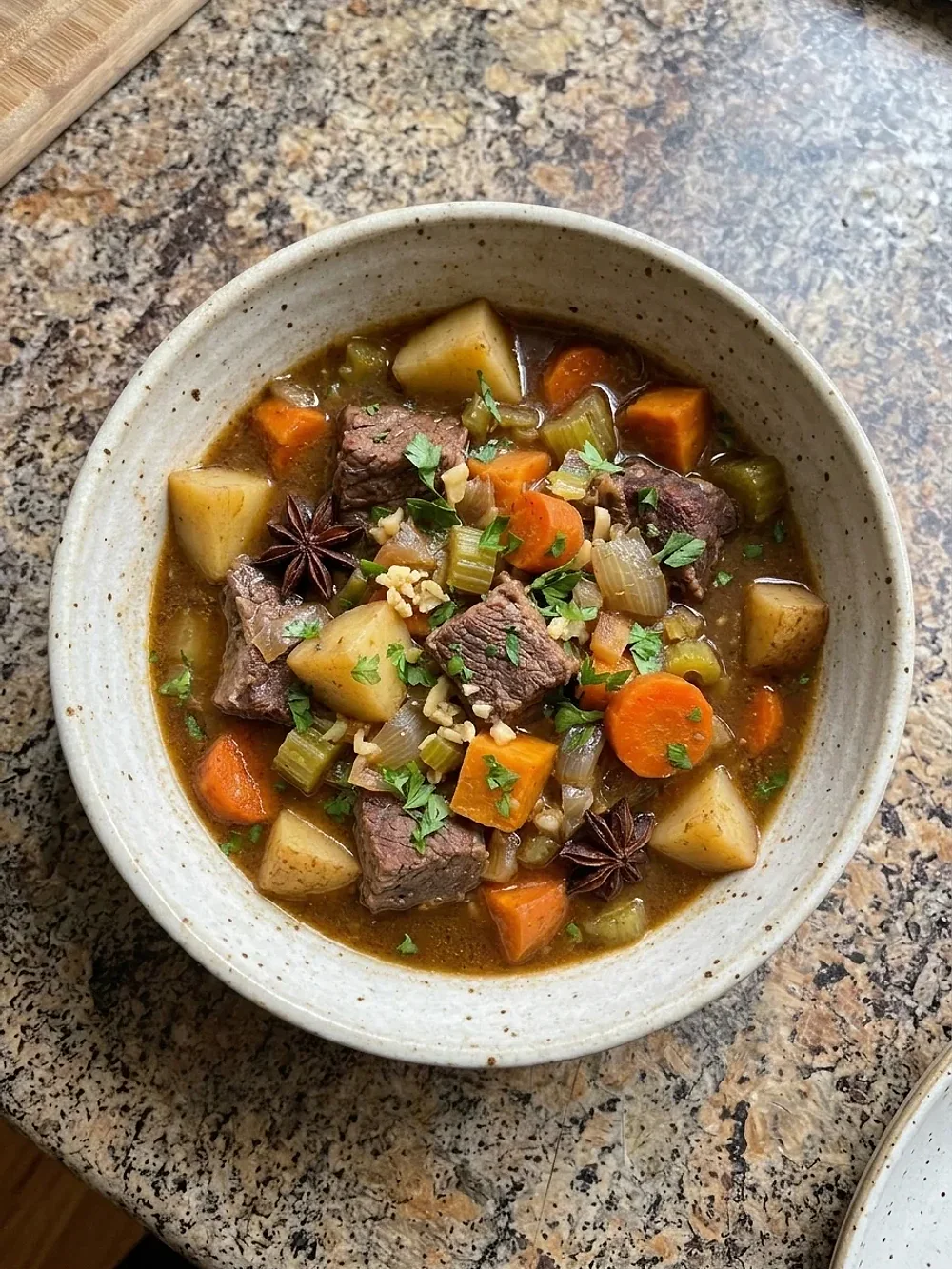
Heat the oil over medium-high heat and brown the beef on all sides, working in batches. Crowd it and the meat steams and turns gray instead of browning, and browning is the entire reason for this step. You want a deep brown crust, and the beef doesn't need to cook through.
Move each batch to a 6-quart slow cooker as it finishes.
In the fat left behind, cook the onion chunks and garlic for a minute or two. Stir in the tomato paste and balsamic for about 1 minute so the paste loses its raw taste, and scrape up the browned bits as the vinegar loosens them.
Pour all of it over the beef.
If you really can't be bothered to brown, skip it; the stew will still be good.
Add the russets, sweet potato, carrots, celery, Worcestershire, the second measure of Italian seasoning, bay leaf, broth and the star anise if you're using it. Stir, then add water only if the vegetables aren't covered. The vegetables release their own liquid as they cook, so I'd rather start a little short than end up with a watery stew.
Cook on low for 5 to 7 hours or on high for 3 to 4 hours, and stir once around the halfway mark so the potatoes cook evenly. Low is my choice, because the longer, gentler cook gives the chuck time to break down fully. It's done when a fork slides into a potato with no resistance and the beef pulls apart under almost no pressure. Slow cookers run hot or cool, so start checking at the early end of the range.
Fish out the star anise and bay leaf, then taste. It almost always needs more salt and pepper, because the potatoes soak up seasoning as they cook. For a thicker stew now, whisk 2 tablespoons of flour with 3 tablespoons of cold water, stir it in 20 to 30 minutes before serving, and set the cooker to high. Use cold water, since warm water clumps the flour into lumps.
Finish with 1 to 2 tablespoons of chopped fresh parsley. Its green freshness cuts through the rich broth.
Mistakes to avoid
- Don't crowd the beef while browning. Too much meat at once drops the heat, and the pieces steam in their own juices. Brown in two or three batches and you'll get a real crust that flavors the whole slow cooker beef stew.
- Keep the vegetables in big chunks. Potatoes cut around 1 inch wide hold up through hours of cooking, while small pieces dissolve into the broth. The sweet potato cooks faster than the russets, so I always keep it the chunkiest.
- Leave the cooker closed. Every peek lets out heat and stretches the cooking time. Stir once at the halfway point and otherwise leave it alone.
- Season at the end. Low sodium broth and starchy potatoes mean the stew tastes under-salted until the very last stage. Taste after cooking, then add salt and pepper in small pinches.
- Use only one star anise. One pod adds depth, and two or three make the broth taste like licorice. Take it out before serving, because it keeps releasing flavor as long as it sits in there.
Dietary and flavor variations
For gluten free, use a gluten free flour for the coating and the thickening slurry. For paleo, use arrowroot starch to coat the beef and 2 teaspoons of arrowroot powder in the slurry.
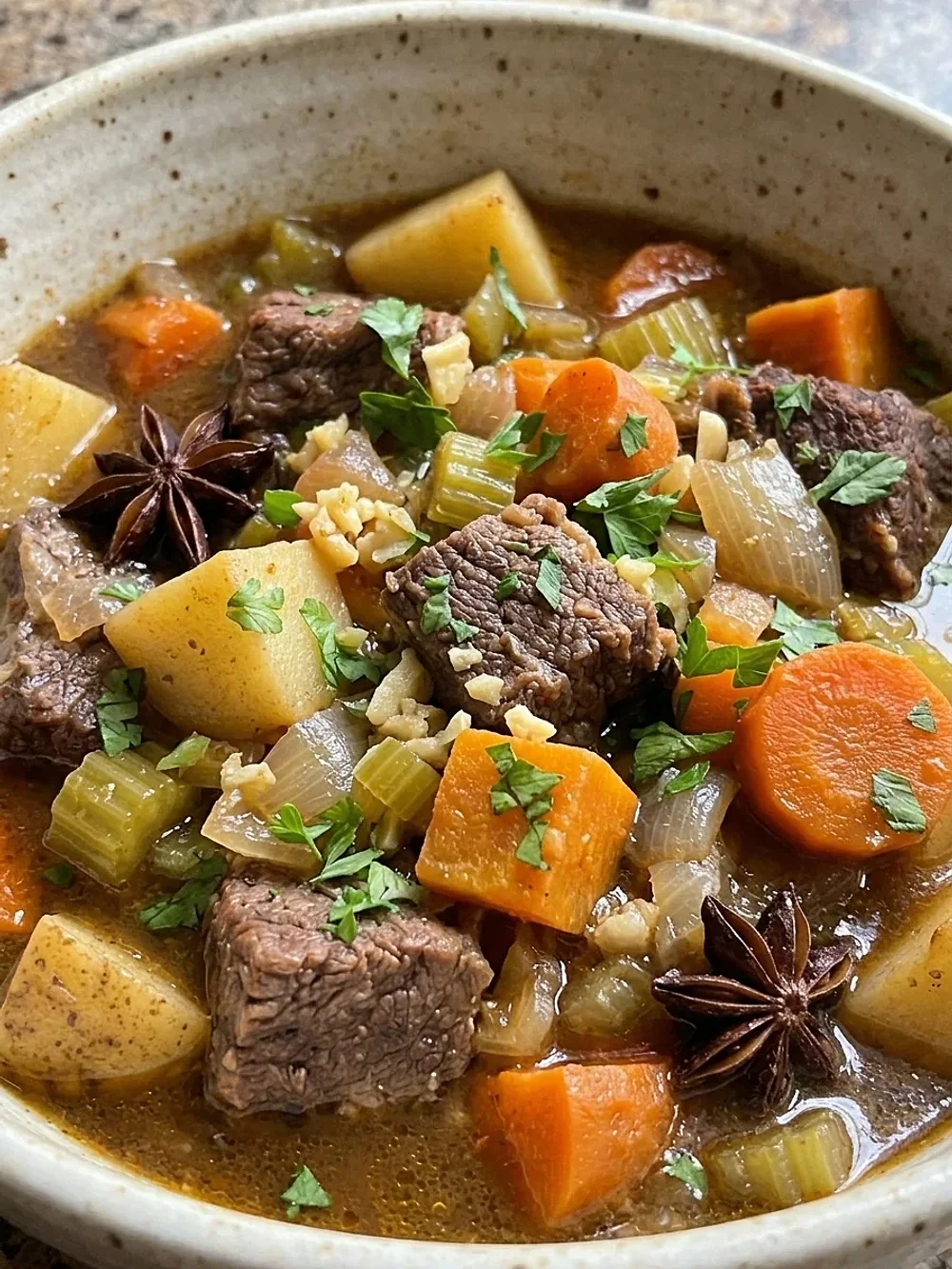
For low carb or keto, coat the beef in ¼ cup almond flour, omit the carrots, swap the sweet potato for pumpkin, and thicken with 1 to 2 teaspoons of xanthan gum instead of flour. Check your Worcestershire and balsamic labels if you're following Whole30, since not every brand is compliant.
I like leaving the star anise in, but if you want a more traditional stew, leave it out and let the herbs lead.
Storing and reheating
Let the stew cool, then refrigerate it in an airtight container for 3 to 4 days. It will be thick and almost gelled when cold, which is exactly what you want.
For longer storage, freeze it for up to 3 months. The potatoes can turn a bit softer and grainier after freezing, but the flavor holds up.
Reheat gently on the stovetop over medium-low heat, stirring often, until it's steaming hot. Add a splash of broth or water if it's too thick.
Thaw frozen stew in the fridge overnight first, so it heats evenly.
Serve slow cooker beef stew with crusty bread, rice or egg noodles to soak up the broth, and add the parsley just before it goes on the table. Leftovers taste even better the next day, once the flavors have had time to settle.
Frequently asked questions
Why is the beef in my slow cooker beef stew tough?
Tough chuck almost always means it needs more time, not less. The connective tissue hasn't broken down yet, so keep cooking for another hour and test again. If you used a lean cut, it won't get tender no matter how long it cooks.
Can I use pre-cut stew meat instead of a chuck roast?
Yes, as long as it's cut from chuck or a similar tough, well-marbled cut. Packages of mixed pieces cook unevenly, so trim them to roughly the same size and check for doneness near the end. I prefer buying a whole roast and cutting it myself, because I know exactly what's in it.
How do I fix a bland slow cooker beef stew?
Add salt first, in small pinches, and taste after each one. If it still tastes flat, a splash of balsamic vinegar or Worcestershire sauce wakes it up, since the problem is usually missing acid and savory depth. A little more black pepper helps too.
Can I add the vegetables later so they stay firmer?
You can, and it works well if you like distinct pieces rather than soft ones. Add the potatoes, sweet potato and carrots about 2 to 3 hours before the end on low. Keep them in big chunks either way, and the stew will still thicken nicely!
Slow Cooker Beef Stew
Equipment
- large zip-top bag
- Large skillet
- 6 quart slow cooker
- Whisk
- Wooden spoon
Ingredients
For the Beef
- 2 pounds beef chuck roast
- ⅓ cup flour (, use gluten free flour, arrowroot starch for paleo, or ¼ cup almond flour for low carb, keto)
- 1 ½ teaspoons sea salt (more or less, to taste)
- ½ teaspoon black pepper (more or less, to taste)
- ½ teaspoon onion powder
- ½ teaspoon Italian Seasoning
- cooking oil
For the Aromatics and Base
- 1 medium yellow onion (, cut into large chunks)
- 4 cloves garlic (, minced)
- 6 tablespoons tomato paste
- 2 tablespoons balsamic vinegar (, compliant brand)
- 2 teaspoons Worcestershire sauce (, use homemade or compliant brand for Whole30)
For the Stew
- 4 medium Russet potatoes
- 1 large sweet potato (, peeled and chopped into 1 inch chunks (leave out if desired) - sub with pumpkin for low carb / keto)
- 3 medium carrots (, peeled and cut into slices - omit for low carb / keto if desired)
- 2 ribs celery (, chopped)
- 2 teaspoons Italian Seasoning (, or 1 teaspoon dried rosemary ½ teaspoon dried parsley, ½ teaspoon dried thyme)
- 1 bay leaf
- 4 ½ cups beef broth (, homemade or low sodium)
- 1 star anise (, optional but adds SO much depth and flavor)
- water (, as needed, to cover the vegetables)
For Finishing
- 1-2 tablespoons fresh chopped parsley (, for garnish)
- more salt and pepper to taste
- 2 tablespoons gluten free flour (, or sub with 2 tsps arrowroot powder for paleo OR 1-2 tsps xanthan gum for keto)
- 3 tablespoons cold water
Instructions
- Combine flour, salt, pepper, onion powder, and Italian seasoning in a large zip-top bag. Add the beef and shake until well coated.
- Heat cooking oil in a large skillet over medium-high heat and brown the beef on all sides in batches, being careful not to crowd the pan. Transfer the browned meat to a 6-quart slow cooker.
- Return the skillet to the stove and sauté the onions and garlic for a minute or two. Add balsamic vinegar and tomato paste and heat for about 1 minute to deglaze the pan, then pour the mixture into the slow cooker over the beef.
- Add the potatoes, sweet potato, carrots, celery, Worcestershire sauce, Italian seasoning, bay leaf, beef broth, and star anise if using to the slow cooker and stir to combine. Add water only as needed to cover the vegetables.
- Cook on low for 5 to 7 hours or on high for 3 to 4 hours, stirring about halfway through, until the potatoes are tender and the meat is cooked through. Times may vary depending on your slow cooker, so check and adjust as necessary.
- Remove and discard the star anise if used, then adjust the seasonings with salt and pepper to taste. Serve hot, garnished with fresh parsley.
- To thicken the stew, whisk together 2 tablespoons of flour (or gluten free flour, 2 teaspoons arrowroot powder, or 1-2 teaspoons xanthan gum) with 3 tablespoons of cold water to make a slurry. About 20-30 minutes before serving, stir the slurry into the slow cooker and set to high, which should thicken the stew within 20-30 minutes.
Notes
- Browning the meat before adding it to the slow cooker is optional but recommended as it develops deeper flavor through caramelization; if skipping this step, simply add all ingredients directly to the slow cooker.
- The stew will thicken naturally overnight in the refrigerator even without a flour slurry, so if immediate thickening is not needed, you can serve it as-is or refrigerate and reheat later.
- For a low-carb or keto version, omit the carrots and sweet potato and substitute pumpkin instead, and use appropriate thickening agents like arrowroot powder or xanthan gum rather than flour.
- Star anise adds significant depth of flavor but is entirely optional; if you prefer a more traditional stew without its subtle licorice note, simply leave it out.
- This stew pairs well with crusty bread, rice, or egg noodles for soaking up the rich broth.