Why This Sizzling Noodle Dish Feels Like Home
When I first tried Mongolian ground beef noodles my kitchen felt electric. I had the pans on high heat. My neighbor always peeking through the fence was obsessed with heat and how it shapes flavor. I remember him tapping his foot when the meat hit the hot pan. He kept saying remember the power of heat. I was curious and excited by that moment.
I whipped out my wok and tossed in a little oil. The sizzle was loud. The idea was simple noodles with ground beef bright with ginger and garlic just like we get at our favorite spot. But I wanted to explore Maillard browning and caramelization up close. I wanted to feel how the sauce clings to the strands. I wanted to taste low and slow depth in a quick cook dish. That is how these Mongolian ground beef noodles were born in my home kitchen.
I kept nudging myself to remember the details that neighbor taught me. I wanted that deep sear on the meat. I wanted that smoky note under the sweet soy. I kept stirring and I felt the rich crust forming. If you are into cooking with a sense of surprise this recipe will let you play scientist and artist in the same moment. Let us go from pantry hunt to plating so you can nail this dish and maybe even impress your own heat obsessed neighbor.
Heat in the Kitchen and Flavor Science
When I crank the stove up I think of cooking as a lab experiment and a family dinner all at once. In cooking Maillard browning is that moment when the meat edges turn deep brown and the aroma makes you pause. That is where flavor builds fast. When small bits of protein rest after you take them off heat the juices reabsorb making each bite juicier. Even though Mongolian ground beef noodles cook fast I sneak in a short protein rest break. It helps with that meaty mouthfeel.
Then there is caramelization in the sauce. I often do a slow simmer to let the sauce thicken while you stir. You do not have to rush it. Think low and slow but keep it under control so you do not burn the sugars. This dual approach makes a simple dish taste layered. The heat science in this noodle bowl is part firework and part slow dance.
My neighbor taught me flavor comes from how you treat heat not just how high you turn the flame. You can get big tastes from careful timing. Heat pushes reactions. This recipe balances a quick sear with a patient simmer. The result is a bowl where the noodles soak up the rich beef sauce and you can taste every science trick in every bite.
Pantry Check for Beef Noodle Night
Before the heat goes on think about your pantry lineup. These noodles need a balance of savory sweet and aromatic. I keep my shelves stocked and ready because my neighbor is always at my door asking about my tricks. Gather these items and you are set to build that layered earthen flavor in each strand of noodle.
- Ground Beef I like lean ground beef around 80 to 85 percent lean for a good sear.
- Asian Style Noodles Try wheat based or rice noodles whatever you have on hand.
- Soy Sauce Both light and dark if possible to balance salt and sweetness.
- Sugar Brown sugar or white sugar helps with that sweet edge in the sauce.
- Garlic and Ginger Fresh grated if you can for maximum zing.
- Green Onions Tops sliced thin to sprinkle on at the end.
- Sesame Oil A little drizzle at the finish for nutty aroma.
- Vegetable Oil A neutral oil for high heat sear.
Once you have these on hand you are ready to move on. Remember to keep an eye on your sauce while you do a slow simmer it will thicken and get shiny. Then hit the meat high on heat for a quick sear. Combine them with your noodles and you get the depth of low and slow flavor in a flash.
Ready Your Tools and Tricks
When I cook Mongolian ground beef noodles I reach for my trusty wok but a heavy skillet works fine too. You want something that conducts heat fast so you can nail that sear. I also have a fish spatula to scrape bits off the bottom and a pair of tongs for tossing the noodles. A small timer helps you track your sear time you do not want to overcook. That is where protein rest helps save you if you go a bit long.
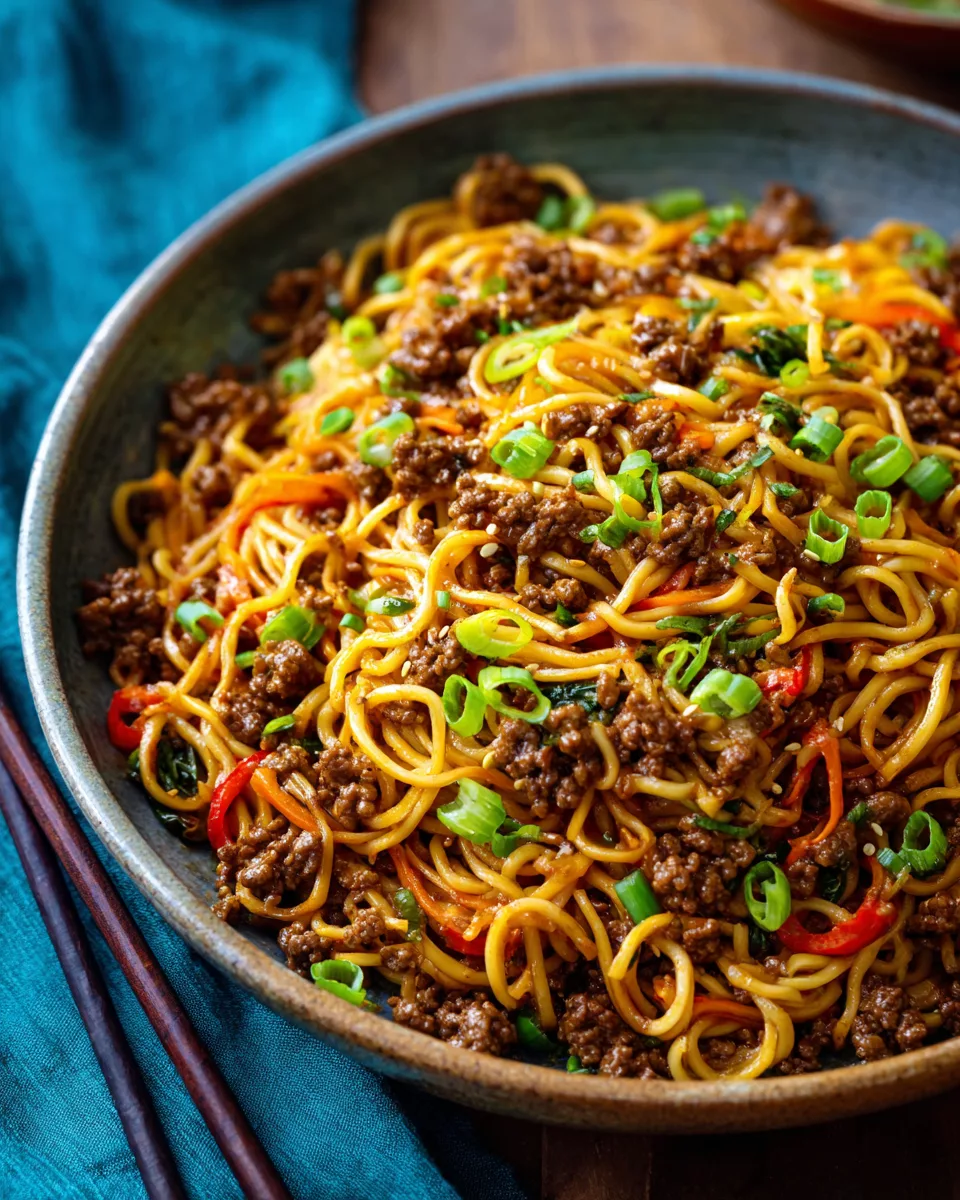
Another trick is to line up small bowls with minced ginger garlic soy and sugar before you start. This mise en place keeps you from scrambling later. You might even have a cup of broth ready just in case you need to thin the sauce. Make sure your noodles are drained and tossed in oil right after cooking so they do not stick together. Once all your tools and tricks are ready you are set for a smooth flow and you can focus on that perfect Maillard browning.
When That Sauce Hits a Simmer
After you sear the ground beef pull it out and drain most of the fat. Then toss in your soy sauce sugar garlic and ginger right in the same pan. Stir that in. The bits stuck to the bottom are flavor gold.
Next add a little water or broth and bring it to a slow simmer. Keep stirring so it does not stick. In a few minutes you will see the sauce thicken and caramelization happen. That shine on the sauce means you are right on track. It is all about patience and the low and slow heat here you can taste tiny difference if you do not rush this step.
Halfway Heat Check
At this spot you have sauce bubbling gently and meat resting. Now slide your drained noodles right into that pan. Toss them quickly so they all get coated. Watch the heat. You might need to lower it for a moment so you do not burn the sauce. You want the noodles to soak it up without getting mushy. That is where some grazing comes in.
Then fold in the meat and let it hang out in the heat for another minute or two. Keep tossing so each strand gets some flavor. Taste a little and adjust salt or sugar as you need. If you want more depth you can let it sit just a bit longer on low heat. That mid cook checkpoint is where you decide how bold your batch ends up. My neighbor popped by to pinch hit a bite at this stage and nodded when it hit the sweet spot. This is the moment to trust your senses and tweak if needed so go slow and steady.
Probing Meat and Noodle Doneness
Here is where I use a meat thermometer or just a quick bite test if you do not have one. Ground beef cooks fast so you are aiming for 160 Fahrenheit or until the juice runs clear. If you are doing the bite test the noodles should be soft but still springy. That little toothsome feel makes this dish stand out from mushy takeout.
After you pull it off the heat give the meat a short protein rest right in the pan with it off the burner. The heat from the sauce will continue cooking slightly while the juices settle. The noodles will soak up extra sauce during this time. Once you see the steam rise from the assembled bowl it is ready for plating. This extra step lets you serve each bite with perfect texture and rich depth.
Plating with a Flair
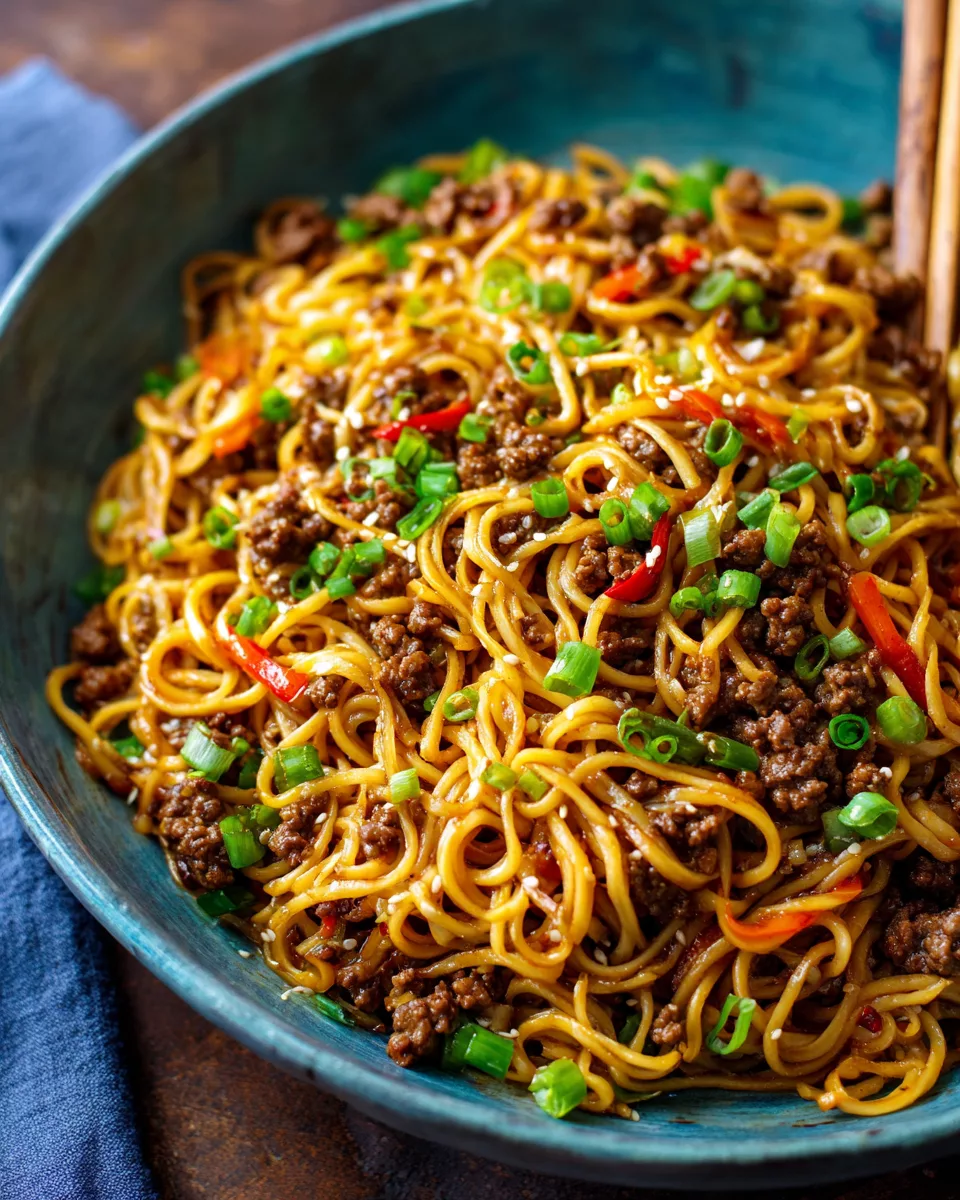
Now grab a shallow bowl or a wide plate and twirl your noodles into a nest in the middle. I like to hold the tongs at an angle and spin till the center pile looks neat this makes the dish feel restaurant style even if it is just for family. Then place handfuls of beef around the top of the noodles so it falls naturally.
Finish with a scatter of green onions and a drizzle of sesame oil. For an extra dash of color you could sprinkle some toasted sesame seeds if you like. Add a few leaves of fresh cilantro or basil if you want an herbal pop. Serve with chopsticks or a fork and watch how that steaming platter draws people in.
Leftover Love and Reinventions
If you have leftovers store them in an airtight container right away. The noodles will soak up more sauce overnight so you might want to add a splash of water or broth before reheating to keep them juicy. Heat them gently on the stove or in the microwave stirring halfway through to spread the heat. You can also freeze portions for up to three months just keep them in a freezer safe box so they stay fresh.
You can turn these Mongolian ground beef noodles into something new too. Slide them into a pan with some scrambled eggs for a quick morning skillet. Or wrap them in lettuce leaves and top with shredded carrots for a lettuce wrap twist. You could toss them into a hearty soup adding some stock and veggies for a noodle soup upgrade. Another idea is to stir in some fresh veggies and do a quick stir fry adding a bit more soy for balance. If you feel adventurous you can crisp them up in a lightly oiled pan like a noodle patty for a crunchy snack. These tricks help you stretch the dish and never waste a bite of that rich beef sauce.
Takeaways and Quick FAQs
These Mongolian ground beef noodles hit the spot when you want something packed with flavor yet easy enough for a weeknight. The key is the dance between high heat sear and patient slow simmer. You get the Maillard browning on the beef and the caramelization in the sauce all in one pan. Giving the meat a short protein rest and letting the noodles soak up the sauce multiplies the richness. Keep your tools ready and follow the timing tips and you can nail this dish every time. Play around with add ins once you master the base and you will see how versatile this recipe can be.
- How do I store these noodles Heat them gently with extra broth if needed and keep in an airtight container in the fridge for up to four days or freeze for months.
- Can I swap the ground beef Absolutely you can use ground turkey or chicken though the Maillard browning may taste a bit different you still get big flavor.
- What noodles work best Wheat based or rice noodles both work just make sure you drain them well and toss them in a little oil so they do not stick.
Mongolian Ground Beef Noodles
Equipment
- 1 large skillet or wok
- 1 cooking pot
- 1 colander
- 1 measuring cups and spoons
- 1 spatula or wooden spoon
- 1 cutting board
Ingredients
- 8 oz. noodles (egg noodles or rice noodles)
- 1 lb. ground beef
- 1 medium onion, diced
- 2 cloves garlic, minced
- 1 cup bell pepper, sliced (any color)
- 1 cup broccoli florets
- ¼ cup soy sauce
- 2 tablespoons oyster sauce
- 1 tablespoon hoisin sauce
- 1 teaspoon ginger, minced
- 2 tablespoons vegetable oil
- 1 teaspoon sesame oil
- salt and pepper to taste
- green onions, sliced (for garnish)
Instructions
- Begin by cooking the noodles according to the package instructions. Drain and set aside.
- In a large skillet or wok, heat the vegetable oil over medium-high heat.
- Add the diced onion and minced garlic to the skillet. Sauté for 2-3 minutes until the onion becomes translucent.
- Increase the heat and add the ground beef. Cook for about 5-7 minutes, stirring frequently until the beef is browned and fully cooked. Drain any excess fat.
- Stir in the sliced bell pepper and broccoli florets and continue cooking for another 3-4 minutes until the vegetables are tender-crisp.
- Lower the heat and add the cooked noodles to the skillet. Pour in the soy sauce, oyster sauce, hoisin sauce, sesame oil, and minced ginger. Toss everything together until well combined.
- Season with salt and pepper to taste. Cook for an additional 1-2 minutes to heat through.
- Remove from heat and serve immediately. Garnish with sliced green onions if desired.